Friday Fundamentals in Film: A Christmas Story

A Christmas Story actually wasn’t one of the movies we watched and discussed in the class I led with the junior high and high school boys, but given the season I thought it appropriate to delve into some of the character lessons that can be found in this classic film.

First let me say that this movie is a favorite for at least two generations of my family, and especially for my mom. She thinks that Ralphie looks a lot like I did at that age, while the era that is depicted is the same as the one when she was that age. I’ve always admired Jean Shepard’s ability to aptly describe the thinking of children without turning it into a caricature.

Secondly, unlike the movies I used in the class to help youngsters learn lessons by watching adults, this is a movie where it’s the youngsters that have the lessons for adults. One of the things that I get out of the movie is that we don’t just see a child’s-eye view of Christmas, but of adults (especially the father) as well.

Ralphie’s dad is a force of nature in his life, amazingly powerful yet unpredictable. His temper tantrums and cursing, while humorously portrayed, can’t help but have an influence on his son’s life. This is certainly illustrated in the incident with the spare tire, but also when Ralphie has finally had enough and takes his frustrations out on the bully, Scott Farkus. (That in itself is a good lesson about how bullies rule through reputation and intimidation but are ill-equiped to deal with the consequences when they push a good man too far, ala The Tin Star). Ralphie knows and fears he has gone over the line, even though he’s probably only acting the way his father would have (why else did it seem so natural for the little brother to cry, “Daddy’s going to kill Ralphie”?).

While I love this movie and don’t mean to draw out it’s darker aspects, there is another lesson that I find myself tripping over all too often, and that is how important it is to realize when your child is offering you a brief opportunity to get inside his or her world and find out what’s important to them. Just like Ralphie’s parents, I’m so wrapped up in my own frame of reference that I don’t realize, until after the fact, when my child has opened herself up to show me something where my acceptance and approval are vital to her (not in terms of getting a specific item, but in knowing she can trust me with her heart). When I’m brusque or dismissive I risk closing a door that I may one day wish I could open but can’t because of all the “you’ll shoot your eyes out” stacked in front of it.

Questions:

  1. What were the Red Ryder BB guns in your own life, and what did you learn by either getting, or not getting, these?
  2. What have been the results of “double-dog” dares in your life?

Point to Ponder:
What stories are your children going to tell about you when they grow up?

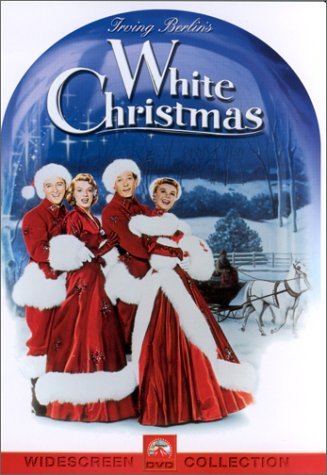
HOLIDAY BONUS FUNDAMENTALS IN FILM: White Christmas

This is another movie I always try to watch when it comes on each year at this time. Yeah, it’s sappy and the plot is mainly designed to sketch together a bunch of singing and dancing scenes, but I really enjoy the themes of friendship, loyalty and decency that pervade the story. There’s the friendship between Bing Crosby and Danny Kaye, the respect and concern that they have for their former commanding officer, and the graciousness and maturity displayed in the way the romantic stories are played out, without all the drooling passion and physicality that seems to be required to show “love” in films today.

I love the naturalness of each characters desire to do good to others, and Rosemary Clooney’s character’s willingness to put her principles ahead of her heart when she (erroneously) thinks the man she loves has behaved poorly. Yeah, they don’t make them like that any more, and more’s the pity. If you haven’t seen this movie before, or haven’t seen it for awhile, take a look. It’s probably showing right now on a channel near you.

Another miracle of Christmas

Last week we had a special day where my wife, Marjorie, was ordained and we also had a graduation ceremony for our oldest daughter, Faith. That day was December 11, which I hope we’ll always remember. In talking about Christmas memories last Saturday night, however, it suddenly dawned on me that December 11 already had a significant place in our hearts, and the earlier memory also commemorated two events.

December 11, 1986 was the day we found out that we were pregnant with Faith. It was also the day that my dog, named Cat (nope, not going to explain that now), died. It was also the day before my wife and I were to host our first Christmas party as a married couple — and we were both devastated and in tears, but for dramatically different reasons.

Friday Fundamentals in Film: Chariots of Fire

The movie Chariots of Fire tells the story of the tests and trials faced by two men competing for two kinds of glory at the 1924 Olympic Games. In this movie, our class left the showdowns of the Old West and the horrors of war to confront the challenges of will and character in athletic competition.

At the same time, however, the decimation and sacrifice of a generation shadows the story, especially early on when the incoming class of Cambridge freshmen have their attention directed to a wall listing the names of Cambridge students and graduates who died in the recently concluded conflict. The new young men are reminded that they now have the privilege of pursuing dreams and goals no longer available to those who have died, and they are challenged to live up to the opportunity before them.

Both the talented and driven Jew, Harold Abrams, and the devout Scotsman, Eric Liddell, end up ignoring convention and even antagonizing society, but from different perspectives. Harold competes for his own glory and rejects the standards of a society that has rejected him. Though he is an amateur, he hires a professional coach – something that was strongly frowned upon at the time. While generally polite to his teammates, his single-mindedness and intensity set him apart from them. Eric runs, so he says, to glorify God and refuses to compete on Sundays out of honor and obedience to the Lord. Yet when it turns out that, once at the Olympics, the qualifying heat in his event falls on a Sunday he must go against the wishes of his teammates, his coaches, and even his Prince and country – as well as personally confront his own desire to compete and his commitment to do what he believes is right.

Key Points

  • Commitment to principle, even in the face of personal objectives, peer pressure – even your government.
  • Sportsmanship
  • Personal discipline and dedication lead to success.
  • Appreciation of the benefits that you enjoy as a result of the sacrifices of others.
  • More examples of how prejudice insinuates itself into our lives.

Discussion questions

  1. Why was Eric’s sister opposed to his running? What was his response to her?
  2. What scriptural reason does Eric have for not competing on Sunday?
  3. What were the negative effects of Eric’s decision? What were the positive ones?
  4. What was the significance of the names on the wall of the dining hall? Why did the faculty draw the attention of the new students to these names?
  5. Who did Eric seek to glorify? Who did Harold seek to glorify?
  6. How did Harold feel leading up to and after the gold medal race? Why?
  7. What was the nature of Lindsey’s (the hurdler) sacrifice? Why did he do it?
  8. What principle(s) – in sports or spiritually – did Jackson Schulz’s note to Eric demonstrate?

Points to Ponder

  • Are you aware of how your personal honor and conduct reflects on, and affects, those around you?
  • Based on the movie, in what ways can a person’s worthy desire for personal excellence be a source of strength and destruction?
  • How do you honor the Sabbath and keep it holy?

A slice of Night Life: a good day

Sunday mornings in our house typically begin with my wife, Marjorie, bringing a tray with coffee and doughnuts or fresh bread and the Sunday paper upstairs to our bedroom. My daughters soon appear and vie for position next to Mom on the “big, comfy chair” — an armchair nearly the size of a double-bed — while we leisurely eat and take our turns with the comics-section before getting ready for church. Yesterday was quite different, however, because we each had our assignments and personal preparations to make in getting ready for a big day.

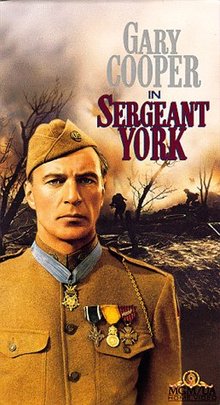
Friday Fundamentals in Film: Sergeant York

Gary Cooper returned to the class as a soldier instead of a marshall (High Noon), but still playing a guy who does what has to be done. In Sergeant York Cooper wrestled with his own faith, not his wife’s, when faced with the possibility of violence. The struggle was not only more real for his character but for us as viewers as well.

The reason I selected this movie wasn’t just because it dealt with the transformation of a drunken, rowdy wild man into a steady hero, but because it is also an excellent dramatization of someone going to the Bible to thoughtfully sort out a conflict as intense (if not as action-packed) as anything he’d meet on an actual battlefield.

Other important details I wanted to get across to the boys was the sense of responsibility Alvin York took on after his conversion; how he sought to walk uprightly in dealing with others and his character in refusing to trifle with the heart of the girl he greatly desired until he had the land and the means to support her. Furthermore, while the movie is a story of courage, it is also a story of humility, restoration and redemption and its tangible benefits. Finally, it provides a last lesson in character as the hero, having overcome persecution and the threat of bodily harm, must deal with the seductive appeal of being a celebrity.

Given these heavy themes and the fact that this movie was the oldest and most archaic in terms of production values, I was somewhat surprised when at the end of the semester the boys said that this was their favorite movie and the one they could most relate to.

Questions to Answer:

  1. What reasons did Mrs. York give for the way Alvin behaved early in the movie? What did she do about it?
  2. What did Rev. Pile mean when he said “Once the furrows get crooked, it’s hard to get them straightened out again”?
  3. Why was getting the piece of bottom land so important to Alvin? Why did he initially fail?
  4. Why did Gracie not want to marry Alvin at first? What did he think was her reason?
  5. What did Rev. Pile mean when he told Alvin, “You’ve got the using kind of religion, not the meeting house kind”?
  6. List the following four things in the proper order (as shown in the movie): redemption, humility, blessing and repentence.
  7. How did Alvin go about resolving the conflict between his belief and his duty?
  8. Why did Alvin think it was wrong to make money off of what he had done in the war?

Points to Ponder:

  1. Why was “the set-up” so important when someone wanted to get married. Is this still important today?
  2. Was Alvin right in believing that he should not kill? Do you think killing in war is permissable?
  3. Alvin told Pastor Pile that “he had prayed ‘til he was blue in the face.” Pastor Pile replied, “It’s not just prayin’ – it’s believing.” Explain.
  4. Which do you think is harder to stand firm in the face of – persecution or seduction?

Of hectic weeks and random thoughts

I’m in the middle of a hectic week at work which will be topped off by a couple of significant ceremonies on Sunday at church. During the regular service my wife, aka Night Visions, will be ordained — an interesting story in and of itself, but for another time. Following service we’re having a graduation ceremony for the Mall Diva to commemorate both her home school high school graduation and her completion of her cosmetology program and imminent licensing. This latter event will require a little speechifying from me so I’m distracted with what I’ll say and how I’ll keep my composure, not to mention working out sundry details in bringing these events off smoothly.

I say all that just to say that this means tonight’s blog entry is not going to be a deeply thought and highly polished gem of reason, but a few random thoughts about winter.

  1. Charlie Brown and me. I know I already touched a little on the Charlie Brown Christmas special recently, but watching it always brings back memories. This was the 40th anniversary broadcast of this classic, and I was there for number one as well. Yeah, it’s weird to realize I’ve been around long enough for the 40th anniversary of anything, but it’s a good biblical number. I know I saw the first broadcast because my mother made kind of a big deal about it at the time and, because my brother and sister and I didn’t know Peanuts from the Katzenjammer kids, telling us about the comic strip and even buying us a paperback Peanuts collection. Once we saw the show we loved it, of course (we watched it at my grandparent’s house because they had color tv).

    Now, whenever I watch the show I always think about how much Charlie Brown’s neighborhood reminds me of my own neighborhood from back then, and I also remember that I had a corduroy hat with a bill and ear flaps just like the one Charlie Brown wears. Watching the show with my kids gives me the opportunity to ask Tiger Lilly what she wants for Christmas and have her say, “Real estate.” Of course, I’ll never forget the true meaning of Christmas.

  2. Colder than a well-digger’s monkey. That’s right, I’m not from Minnesota, so cut me some slack, Andy. Now, I don’t mind weather that’s “bracing”, “brisk”, “nippy” — or even “Minnesota-like.” It’s that Canadian weather that rushes across the border like it’s in a hurry to get to Florida that I can’t stand. Mr. President, defend these borders!

    I have a winter coat that weighs about 35 pounds. It zips up past my face and extends below my knees. It’s not very rakish, but it’s lined with down, thinsulate and a layer of cashmere and I swear it’s almost bullet-proof. And sometimes I wear it and still feel like a streaker. I left the house the other day and it was like getting busted across the face with a frozen codfish. It was the kind of cold that makes your nose hair stand at attention while the wind goes through your pockets looking for loose change; the kind of cold that gives you goosebumps the size of Volkswagons on your flannel-clad bottom. It was so cold (how cold was it?) that the legislature was keeping its hands in its own pockets.

  3. Northern Lights. It also gets dark around 4:00 o’clock in the afternoon this time of year. That would be almost unbearably depressing when it’s this cold except for one saving grace. When I leave my office each evening I stand under a large, lighted portico and look up the Nicollet Mall. The lights of the city glowing in the darkness turn the sky a rich purple-blue that is nearly as mesmerizing for me as the ocean. Often I’’ll linger a bit, just taking it in — until I get hit in the face with a codfish.

Four more months til golf season.

A real paper chase

The National Center for Public Policy Research is attending the UN Climate Change Conferences in Montreal and distributing “emissions credits” — printed on toilet paper.

I’m guessing that there are more than a few flushed faces around the table as a result.

Policy Group Distributes Toilet Paper ‘Emissions Credits’ at U.N. Global Warming Conference

Montreal, Canada – The National Center for Public Policy Research is handing out “emissions credits” printed on toilet paper at the United Nations Climate Change Conference in Montreal today, to symbolize the failure of the Kyoto Protocol and the futility of emissions trading schemes.

Under the European Union’s “CO2 Emissions Trading Scheme,” companies are allotted credits that allow them to emit a fixed amount of carbon dioxide. Companies that reduce their carbon dioxide output, and thus don’t use all of their credits, can sell them to companies who are exceeding their C02 allotments.

As the flawed Kyoto treaty is all but dead, emissions credits aren’t likely to be of any value in the future.

“Emissions credits aren’t worth the paper they’re printed on,” said David Ridenour, Vice President of The National Center, “Unless, of course, that paper happens to be toilet paper.”

Read the whole story and see a picture here.

Blood on the ice

I read yesterday’s update on Fraters Libertas where Hugh Hewitt extracted a certain measure of revenge for the lads’ frequent references to his misadventures with a snowmobile and one of Minnesota’s indigenous trees. Hugh ran Chad the Elder’s post-puck encounter photo, which reminded me of Chad’s original description of his reckless injury.

That, in turn, reminded me of the last hockey game I ever played.

Some 17 years ago I joined a league that was then called the National Novice Hockey Association (NNHA). The league was designed for people who hadn’t grown up playing hockey and, having discovered the sport late in life, wanted to give it a try without being used as a zamboni by more experienced players. That fit my situation exactly.

I grew up playing football and basketball. It wasn’t hard for me to move from one sport to the other because my approach was the same for both: cream the person with the ball. I never saw a hockey game in person until I moved to Minnesota when I was in my 20s, but became hooked almost immediately. When the NNHA arrived in town I was so ready; given my already established approach to games I couldn’t wait to get the chance to jack somebody up at the blueline.

At first it was pretty comical. Few people in the league had any real experience and many of us had never even skated before. Watching our games and practices was like watching a bunch of 200 pound Mites or Pee Wees crash (literally) the boards. We were all pretty good-natured about our klutziness; when players collided we’d usually laugh about it. One of my favorite memories is the time when I scored a goal after both the defenseman and the goalie fell down in quick succession in the face of my one-man rush to the net. Turning toward my bench I nearly wet myself when I saw my teammates doing the wave.

After a few seasons, though, things got very competitive and we started taking ourselves pretty seriously. I was on one of the better teams in the league (no thanks to my contributions) and we had a manager who tried to elevate our skills by scheduling between game scrimmages with bar league teams. It was a good idea in that, as good as we thought we were getting, we were hard-pressed to keep up with these more experienced players. It was a bad idea in that these scrimmages often got rather chippy as a result. They were also especially frustrating for me because I never was a strong skater.

One night in the Parade Ice Gardens we had one of these scrimmages and I went into a corner after a puck with a guy from the other team. We were up against the boards, alternately pinning each other’s stick while we pushed against each other and tried to clear the puck. Already running a little hot to begin with, my “intensity” ratcheted up a couple of notches the longer we tustled. The third time he pinned my stick I yanked hard on it in an upward direction just as my opponent shifted to kick at the puck again. Suddenly my stick was free – and flying straight into his face. He had a helmet on but, like the Elder, no faceguard. He went immediately to the ice with his hands over his eye, blood gushing over his gloves. I was transfixed next to him, nearly sick – not at the sight, but at the thought of what I’d done.

Yes, it was an accident. I hadn’t set out to hurt anybody and that hadn’t been my intention when I tried to yank my stick free, but I also knew I had been at the edge of my self-control and someone was now suffering for it. Fortunately it turned out that the cut was an inch below the other guy’s eye. He might need a couple of stitches, but he wasn’t going to need an opthamologist. I apologized profusely and there weren’t any hard feelings from him or the rest of his team, but as I drove home later I just decided I’d had enough. I may have learned a lesson that probably would have stuck with me if I continued to play, but at that point I just said to myself, “If you can’t handle yourself any better than that it’s time to quit.” There was still about a month left in the season, but the next day I took my gear into Play It Again Sports.

It was near Valentine’s Day, and money was tight for us then. I now had some extra cash in hand, but didn’t want to commemorate the end of my hockey career by paying the electric bill. Instead I bought a small pearl ring for my wife – five years of blood, sweat and fears condensed into a small precious object. It was a fair exchange.

Since then I’ve thought from time to time about whether I did the right thing at the time. Should I have tried to apply the hard-learned lesson back in the arena? Probably, “yes.” Was it right to quit a team before the season was over? Definitely, “no.” Still it was an experience in character and self-control I could draw on when the opportunity came years later to teach the Fundamentals in Film class, or any time I started to feel my temper start to get away from me.

The little pearl ring was ultimately lost years later when we had some things taken from our home, but I still carry the reminders of that night inside me. Unfortunately, there’s someone else out there who still carries his own little reminder as well.

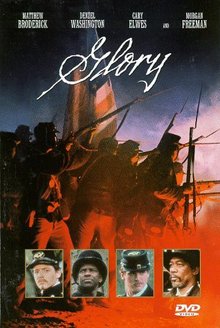
Friday Fundamentals in Film: Glory

The fourth movie in the series is Glory , the story of the all-black regiment that fought in the Civil War. It had the requisite blood and guts action to get the class’s attention but also some intense lessons. The key points for me were to focus on were personal honor and self-respect mixed in with the dynamics of being part of a larger group and being able to sublimate yourself in order to function as a team, even to the point of extreme sacrifice.

Matthew Broderick plays Robert Gould Shaw, a young, idealistic white officer in the Union army. Wounded in his first action, he returns to Massachusetts and is promoted to Colonel and asked to lead a newly-formed, all-black regiment – The Massachusetts 54th Infantry. Assisted by his best friend, Major Cabot Forbes and joined by another friend, Corporal Thomas Searles, a free and well-educated black man who had grown up in Boston who enlisted in the regiment, the men and the rest of the 54th not only have to deal with their own personal challenges and prejudices (even between the black soldiers) but the dismissive attitude of the Army and high command as well.

While some of the racism was ugly and overt, there were also examples of a form of prejudice that was kindly and sensitive (at least on the surface) while having low expectations of the troops. This was best displayed by Major Forbes who was friendly with the men, but didn’t expect them to perform at a high level and often cut them slack. In contrast, Col. Shaw – having seen up close the horror and devastation ahead of them if the 54th – assumed an uncharacteristic harshness in order to drive the men hard in their training, even bringing in a bigoted Irish non-com to drill and berate the men mercilessly to toughen them up.

The movie has interesting character studies of men dealing with their own issues in order to become part of something larger. Col. Shaw is afraid he doesn’t have the courage and ability to lead the men well; Thomas has to face ugly truths about himself after his sheltered upbringing, and Trip (Denzel Washington), a runaway slave, has to deal with his own stubborn independence and rebelliousness. It was an interesting exercise to discuss the movie with the boys as I asked them which character they most identified with, and what they thought were the requirements of giving, earning and receiving respect to and from others, and challenged them on what perceptions and misperceptions of themselves and others they might have in their own lives.

Some discussion questions:

  1. What was the difference between the way Col. Shaw saw the troops and the way Major Forbes saw them? How did this affect the way they acted towards them?
  2. Describe the two ways (both appropriate) that Col. Shaw reacted to the reduced pay and the men’s protest?
  3. Why did Robert bring in Sgt. Mulcahy? Were Sgt. Mulcahy’s methods appropriate and effective?
  4. How did Trip change over the course of the story? What did he have to overcome?
  5. How did Robert change? What did he have to overcome?
  6. Why did Thomas volunteer? What did he learn?
  7. Trip and Col. Shaw maintained eye contact throughout Trip’s flogging. Describe why this was necessary in each man’s eyes?
  8. Which main character changed the least through the course of the story? Why?

Points to Ponder:

  1. Which character in the movie (Col. Shaw, Major Forbes, Thomas, Trip, Sgt. Rawlins) is the most like you? What were his positive and negative attributes?
  2. Is there an issue in our nation today that divides society in the way that slavery did then? If so, what is it and why?
    What was the difference between the way the black “contraband” troops acted and the way the 54th acted? Why?

  3. Robert Shaw, Cabot Forbes, and Thomas Searles were all friends before the war. Did Robert treat his friends unfairly in the army, or did his friends treat him unfairly? Why?
  4. Describe the significance of the worship service the night before the big battle, and the effect it had on both Trip and Thomas.

The true meaning of Christmas specials


Perhaps I was like Scrooge seeing Marley’s face on his door knocker, but I’m almost certain that when I watched the Charlie Brown Christmas special I heard Linus stand on stage and say:

And it came to pass in those days, that there went out a decree to render unto Caesar, and that all the world should shop and pay sales tax, and all went to be taxed, everyone into his own mall. And Joseph also went up from Shakopee, into Bloomington, unto the Mall of America, (which is called MOA) because he was an American, to shop with his wife Mary, they being great with debt. And so it was, that, while they were there, the items were purchased that needed to be delivered, and they brought forth their credit card, wrapped in promises to pay and laid it on the counter because there was no money in their checking account.

And there was in the same country stewards, abiding in their homes, keeping watch over their televisions by night. And lo, the commercials from Mammon came upon them and the glory of the goods shown round about them and they were sore afraid they would miss a good deal. And the commercial said unto them, “Fear not, for behold I bring you great tidings of a good economy, which shall be to all who do their part. For unto you is laid out this day, in a store near you, all manner of precious items, and this shall be a sign unto you: 40% off.” And suddenly there was within the commercial a multitude of friends and family praising their gifts and saying “Glory to the Giver with the highest credit card balance, and on earth peace, good will toward all, just $29.95.”

And it came to pass that I kept all these things and pondered them in my heart.

Fear not, for this is not going to be a complaint on how commercial Christmas has become. Frankly, those complaints have become as traditional and meaningless to most people as holly and ivy (if you don’t know what these represent, look it up). Complaining about how the true meaning of Christmas is being ignored, without actually dwelling on this meaning, is merely spiritual lip service; kind of like singing “Gloria In Excelsis Deo,” without knowing what it means. For me the issue is not that commercialism obscures the meaning of Christmas, but the cultural camouflage that diverts attention. As a case in point, let’s look at the Christmas specials we watch with our families.

Despite my parody of the Linus speech earlier, the Charlie Brown Christmas special is a classic and a true Christmas special because it is one of the few that deals specifically with the birth of Christ. “The Little Drummer Boy” is another old one and favorite of mine that also does this, while the Veggie Tales “The Toy That Saved Christmas” is the highlight of the new generation. Many so-called Christmas specials, however, purport to be about finding the true meaning of Christmas, but where is the Christ in “Rudolph the Red-nosed Reindeer,” “How the Grinch Stole Christmas,” “It’s a Wonderful Life” or “A Christmas Story”? Watch these and most other shows and you’ll get the message that you can be what you want to be and you should do kind things for others, and that Bumbles bounce. Nice shows and nice sentiments all, but while Jesus would exhort us to be “nice” it isn’t why he came. Don’t forget that “for unto you is born this day in the city of Bethlehem a Savior, who is Christ the Lord.”

Enjoy the shows with your family, but look for ways to highlight fundamental Christian concepts within the programs, even if these messages appear unintentional. Since everything will ultimately prove the word of God true, teachable moments are everywhere if we are alert to them. The classic movie “Miracle on 34th Street,” for example, really focuses on the importance of faith, at one point virtually reciting Hebrews 11:1 and 11:5-6. Don’t miss the opportunity to call this to your children’s’ attention. I once sat open-mouthed (but not slack-jawed) watching the SpongeBob Squarepants Christmas program for the first time. The story is that SpongeBob has never heard of Santa Claus until his friend Sandy fills him in. SpongeBob gets so excited that he stands on a street corner proclaiming the good news to everyone (no one else has heard of Santa either) about how kind Santa is and about all the gifts he will bring. Soon, everyone is shouting, “We love Santa!” I turned to my daughter and said, “SpongeBob is an evangelist!”

Of course, SpongeBob is focusing on all the benefits that Santa brings, which is also a failing of modern evangelism. People are exhorted to “try” Jesus for all the blessings that will be added to their lives but if these don’t show up right away (or don’t show up in the way people expect) they get disillusioned, even bitter. This, too, happens in the SpongeBob Christmas show. We lose sight of the fact that the first benefit of the salvation we receive from believing in Christ is not in getting what we deserve, but in avoiding what we deserve.

A good story for illustrating this concept can be Charles Dickens’ “A Christmas Carol.” You may think you know the story of Ebenezer (there’s a Biblical name) Scrooge, but look at it as a parable. Scrooge is greedy and cruel and oblivious to his iniquity. He doesn’t heed warnings to change, but because of another’s desire for him to avoid his fate, he is visited by spirits that convince and convict him of his sins and show him what is in store for him. In horror he repents and asks for forgiveness, vowing to change. He’s not concerned about the benefits of a new way of life; he just wants to escape the fruit of the old way. Waking the next morning and realizing his opportunity he says “Thank you (Holy Spirit) Spirits!” and is ever after known as “a man who kept Christmas (Jesus) in his heart.” (By the way, I happen to think the George C. Scott “Christmas Carol” is the best, but I’ll always have a soft spot for Mr. Magoo as well).

I’m sure there are many more examples in Christmas programs that I’ve left out but that have occurred to you. I’d love to hear what message or blessing you and your family get out of different Christmas shows, so feel free to leave a comment. Just don’t shoot your eye out!

Merry Christmas, my friends, and to your families!

Update:

Rob’s touching tribute to Linus’s speech about the true meaning of Christmas is posted over on The Llama Butchers (originally posted last Christmas).