Friday Fundamentals in Film: The Shootist


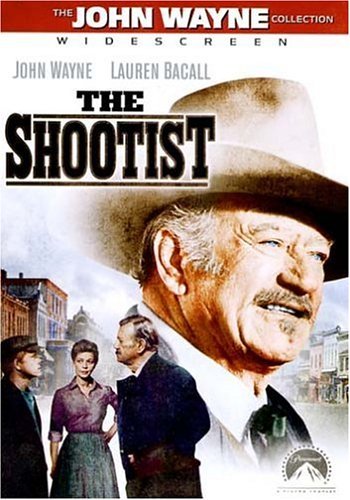
I have some more movies in mind that will allow me to continue this Friday series, but this week’s movie was the last one I presented to a class of junior high and senior high school boys. I chose The Shootist (1976) as the final movie not just for the character issues, which we’d pretty much covered already in other movies, but for the subtleties and shadings of character and the way a movie or story can manipulate our emotions and get us to identify with a “hero” who might not be all that heroic when you look really closely.


This is not to bad-mouth John Wayne at all, here appearing in his final movie, or even the character he played. Fittingly, this is the story of a famous but terminally ill aging gunfighter (or “shootist”) trying to find peace in his final days. The point I was trying to get across to the boys, however, is how easily we look for a “good” guy in a story and identify with him – even if it’s only because he’s “less bad” than others.


The movie features a great cast with Wayne, Jimmy Stewart, Lauren Bacall, Henry Morgan, Richard Boone and Ron Howard as a fatherless and impressionable young man. Howard narrates the opening sequence of the movie, a flash back of gunfights featuring the infamous John Bernard (JB) Books which were, cleverly, scenes lifted from earlier John Wayne movies. When Books rides into Carson City, Nevada in 1901 he suspects he’s dying and is looking to lie low and pass away in obscurity. After his doctor friend (Stewart) confirms the diagnosis, however, word gets out in the town that they have a “celebrity” in their midst and many people start angling for a way to make a name or some money for themselves at Books’ expense. In the process he meets and eventually befriends the widow (Bacall) running the boarding house where he stays and her son (Howard). In interludes with this broken family Books gains a small taste of the life he might have had as a husband and father if he hadn’t followed the path his life took instead.


There were three things I wanted the boys to get out of the movie. One was the way Howard’s character, young Gillom, attempted to act more “manly” by swearing and drinking and otherwise carrying on as he thought men do because he didn’t have a model in his life. Another lesson was in the way Gillom’s mother, a staunch Christian who deplored Books’ lifestyle and history, came to see the “Christian” way to act toward someone who is suffering. The main point, however, was the code Books emphatically claimed that he lived by — “I won’t be wronged, I won’t be insulted, I won’t be laid a hand on…I don’t do these things to others, and I expect the same from them” — and how he regularly broke that code without seeing the irony in doing so.


Points to Ponder:


  • Does your life make your reputation, or does your reputation make your life?

  • The influences (or lack of influences) that shape our lives.

  • The consequences and significance of decisions we make.

  • Society’s expectations and exploitation of heroes.

  • Is being good, good enough?


Some questions you might want to be able to answer:


  1. What was Books’ personal code that he explained to Gillom? Did he live up to it?

  2. What were Mrs. Rogers’ personal codes? How did her codes come into conflict with each other?

  3. How did Gillom try to make himself appear manly? What events in his life might explain his behavior?

  4. Was Books a good man or a bad man? What qualities did he have that were admirable? What qualities did he have that were not?

  5. What price did Books pay for his way of life? (What things did he give up, or miss out on?)

  6. Did Books have faith? Was it sufficient to get him into Heaven?


Great Quote:

JB: “Damn!”

Bond: “John Bernard, you swear to much.”

JB: “The hell I do!”


As I said, I have a few more movies in mind that I think portray admirable character qualities and motives and are useful examples for young people and I hope to continue this series and format here. If you have a favorite movie that fits this profile and objective by all means leave a comment or send me an email; I’d be happy to consider watching the movie and including it here at some point.


In a future, separate, post I’ll describe the results of the class and the impact, if any, it had on the young men who participated.


There are worse ways to promote women’s athletics

There’s been some discussion and consternation on the radio shows today about the U.S. women’s hockey team taking on the Warroad High School boys team last night — and losing. Some callers thought it was great for the game, others thought it was an embarrassment and a no-win situation for both teams.

Frankly, I would have paid to watch the game if it had been in the Twin Cities. I’ve watched women’s hockey on several occasions – including going out with some friends a few years ago specifically to watch a little 8th grade girl named Natalie Darwitz play – and I’ve wondered how an elite team such as the Gophers or the Olympic team would fare against different levels of men’s teams. It sounds like it was a good, close game (2-1 final), and my guess is that in a five or seven game series the Olympic team could prevail.

I suppose it was a bit of a promotional stunt, but at least it was done as a legitimate competition, and it was a case of women athletes calling attention to their sport by actually playing the game and not by taking their clothes off like so many teams and athletes around the world are doing now — even curlers (not the hair-variety)!

Yes, the less inhibited say they’re doing it to raise money for their chronically underfunded sports or to show off the beauty of a classic form. I suppose it’s a few degrees better if they’re exploiting themselves instead of leaving it to others, and you could say it’s just savvy capitalism (kind of an “all the market will bare” approach) and simply another way to “go for the gold.” Whatever.

I say if the women’s hockey team wants to play the boys, let ‘em. Just so long as they keep their breezers on.

Obligatory Vikings post

I don’t know why I don’t write more about sports. Sports are certainly a major interest of mine and occupy a lot of my free (and not so free) time, but I apparently get enough venting done watching the local teams play so I don’t have to blog about it. I now realize that our teams are all struggling because I’ve kept my insights to myself instead of giving our coaches and team owners the benefit of my wisdom. In the hopes that 2006 won’t be as dismal as 2005, I’m going to plug in a series of posts about our Minnesota squads, beginning with these deep thoughts on the Vikings. Please, hold your applause until until I’ve dissected every team.

Vikings: Yeah, the way Zygi fired Mike Tice was about as ham-handed as Tice’s own efforts to psychologically motivate his players, but it’s not the embarrassment some people portray it as being (and believe me, we Vikings fans know embarrassment when we see it). With 8 coaching openings in the league, Zygi knew every minute was going to count (the top coaching and GM candidates were, in fact, locked up and out of the Vikings reach immediately). I don’t know that much about the coaches that are left except to be suspicious of all the hype. I won’t pretend to be an expert based on reading a two-paragraph biography of each of the names out there. From what I’ve seen over the past few years, though, I’d love it if they could find a way to get Herm Edwards from the Jets, even if it costs a high draft pick, because he’s a great combination of class and ability. My overall concern, however, is that there is no way there are enough “geniuses” out there to fill all the coaching openings and the Vikes will end up in a worse situation than what they had.

I’m feeling better

From “The Hitchhiker’s Guide to the Galaxy”:

Pan Galactic Gargle Blaster

A potent drink invented by Zaphod Beeblebrox. The effects have been likened to having your brains smashed out with a slice of lemon wrapped round a large gold brick.

How long have I been out?

Either somebody slipped one of these combustive potions into my morning mouthwash yesterday, or I’ve mysteriously experienced the effects of the drink without any of the fun of meeting the Z-man.

Don’t worry (or should I say, “don’t panic”), I’m feeling better. Blogging will resume. WHAT is that unholy, pounding racket?!

Stupid keyboard.

Oooooo – look at the pretty lights!

Does it come in black?

You’d have to be Bruce Wayne to afford this bat-out-of-hell-mobile, but this baby actually exists (New York Times free registration required to view link). It’s the Bugatti Veyron 16.4, and if you’ve got a million bucks under your sofa cushions, and an excellent relationship with your local Highway Patrol, this is the car for you.

Go to the link for a picture and full driving report, but here are a few numbers:

1,001(horsepower)
16(cylinders)
7 (speeds, automatic)
10(radiators)
18(mpg, highway)
9(mpg, city)
2.5(seconds to go from 0 to 60)
7.3(seconds to go from 0 to 125)
55.6(seconds to go from 0 to 253)
12 (minutes it takes to empty the gas tank at top speed)
1.2 million(dollars to drive one home – taxes not included)

And, like the Batmobile, it has certain special features:

The car’s everyday top speed of 234 m.p.h. is enough to make it a king of the road. To be the performance emperor, though, the driver must resort to a second ignition key to the left of his seat.

The key functions only when the vehicle is at a stop. A checklist then establishes whether the car – and its driver – are ready to go for the maximum speed beyond 250 m.p.h. If all systems are go, the rear spoiler retracts, the front air diffusers close and the ground clearance, normally 4.9 inches, drops to 2.6 inches.

And no, MD, we’re not getting one.

HT: Cake Eater Chronicles

So that’s what she’s been doing…

Good news, blighters: Kelley at Suburban Blight is blogging again after taking a couple of months off, and boy, does she have news.

The world is a more interesting place when Kelley is blogging … not to mention funny, in your face, and a bit raunchy at times. And always, always honest. Welcome back, Chickadee.

O, Stranger, where art thou?

As reported in the New York Times the other day, a provision in the border-security bill just passed by the House makes it a federal offense for anyone to offer assistance or services to illegal immigrants, punishable by as much as five years in prison and confiscation of property and/or assets. Churches, social service agencies and advocacy groups are raising an outcry.

Add my voice to that list.

While I strongly agree with providing the manpower and other resources to enforce our immigration laws and protect our borders (and agree that this is one of the powers of a federal government), this particular provision is both immoral and overreaching and my objections are not just philosophical but personal.

Here’s part of the story: In March of 1995, a man named Vladimir entered the U.S. illegally, using a fake passport — and then turned himself into the Immigration office in Bloomington, across from the Mall of America, and applied for asylum. He was processed, told to keep the office informed of his whereabouts, and shown the door. Within a couple of weeks through a series of bizarre, even miraculous, circumstances I met Vlad at my church and took an active interest in his situation. His story had begun several years before with him fleeing in fear for his life from what was then the Soviet Union. Still ahead, at the time we met, were another 20 months where the two of us would navigate the Immigration Service bureaucracy until a judge would ultimately rule in Vlad’s favor. I won’t go into all the circumstances and twists and turns of this ordeal here, but I do want to focus on one part of what happened and how it applies to this misguided law.

Once I and others from my church got involved and understood Vlad’s situation, we stressed how important it was for him, although in the country illegally, to obey the laws while he was there and his case was working its way through the system. Sounds simple enough, but in practice a significant challenge quickly arose. Vlad had some money with him, but certainly not enough to live on for however long it might take to get his status resolved. Fiercely proud and independent as well as handy and industrious, he wanted to work to earn money to live on and – once it was determined there were no legal aid groups available to assist him – pay for his legal counsel. Being undocumented, of course, meant that it was illegal for him to do that. Technically, the government was allowing him to stay while his case was pursued, but not allowing him to support himself while he did so. Hard as it was for Vlad to accept it, we were able to find homes where he could stay and the people in our church opened their hearts to him, blessing him with a bicycle and other gifts to help him get by more comfortably. When his hearing neared our small congregation also, in a single service, collected some $3,000 to pay for his attorney. Many of us wept in joy with Vlad when asylum was finally granted.

As I’ve stated here many times, my belief is that the government gets into far too many areas that ought to be left to individuals and to the church or communities of faith and that its intervention is usually disastrous when it comes to actually achieving what it hoped to accomplish by getting involved in the first place. God requires us to show mercy and compassion to others, including those “strangers who dwell among you” (see Leviticus 19:34 and 24:22 for starters) and to apply the same laws as those that citizens live under (implicit in this is that “stranger” receives the benefits and the requirements of those laws, hence our insistence that Vlad not work illegally). In Vlad’s case a small group of people – not the government – got involved to support him physically, emotionally and spiritually — and every bit of it would have been illegal if the proposed law had been in effect then.

The debate over what immigration laws are necessary and constitutional is multi-faceted and there are good arguments to be made from various perspectives in reaching a result that is just and merciful as well as practical. This particular provision in its current form, however, is simply wrong.

Challenging Word of the Week: Bête noire

bête noire
(bet nuh WAHR) n., adj.

This is a French expression (literally, black beast) taken into English to describe anything that is a pet aversion, a bugbear, a thorn in one’s side. A bête noire can be a person, an object, a chore, anyone or anything that one simply can’t stand. To a child, spinach can be a bête noire. The caption under a Carl Rose cartoon in the December 8, 1928, issue of The New Yorker (mother and child) reads:

“It’s broccoli, dear.”
“I say it’s spinach, and I say the hell with it.”

To some, Wagner may be a bête noire; to others, hard rock may qualify. Contemporary painting is a bête noire to countless thousands, nay, millions. Choose your own: ballet, corned beef and cabbage, Liberace, politicians, wine connoisseurs; long airplane trips, missiles, New Year’s Eve parties, children in TV commercials, all TV commercials, books about words…

This selection is taken from the book, “1000 Most Challenging Words” by Norman W. Schur, ©1987 by the Ballantine Reference Library, Random House.

I post a weekly “Challenging Words” definition to call more attention to this delightful book and to promote interesting word usage in the blogosphere. I challenge other bloggers to work the current word into post sometime in the coming week. If you manage to do so, please leave a comment or a link to where I can find it.

Friday Fundamentals in Film: Sense and Sensibility

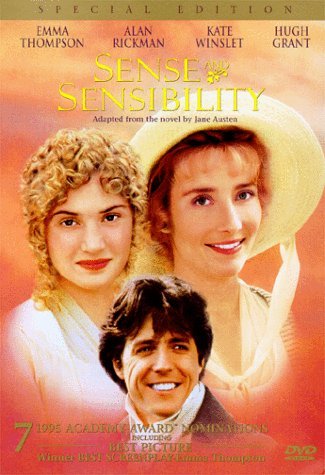
For the next-to-last film in this series for the class of junior high and high school aged boys I departed from the war, western and sports genres for a classic “chick flick”: Sense and Sensibility with Emma Thompson, Kate Winslet, Hugh Grant and Alan Rickman. This dramatic shift in direction led one of the lads to ask, “Are we being punished?” I told them that that wasn’t the case, but there were a number of reasons why I wanted them to learn the lessons within this movie.

For one, I said, the emotional and internal battles fought in this movie, while non-bloody, were every bit as intense and devastating as any war film we’d watched and were far more likely to occur regularly in their own lives than the scenarios in the the so-called “action” flicks. I also wanted them to see examples of the different ways that men and women think and act and the consequences of things said and unsaid. And, I added, “there are going to be times in your life – if all goes well – when you’re going to have to sit through a ‘chick flick’ and this is good practice.”

The story, of course, comes from the Jane Austen book and describes the hardships and romances of two sisters and their mother when the patriarch dies and, by law, his estate goes to his son, the sister’s half-brother from their father’s earlier marriage. While the father made the son promise that the women would be well provided for, the son – influenced by his grasping wife – ends up allocating them a pittance, setting the stage for all that comes after. The two sisters have different outlooks on life and love (the “Sense” and “Sensibility” of the title) and both undergo severe but different trials in the process of getting to the happy ending.

The story is an interesting character study not only of the time period but the way “power” between the sexes is divided and applied. There are heroes and scoundrels among both sexes and while the men supposedly have all the legal power and advantages, the main authority figures driving most plot changes in the movie (in terms of dictating what is going to happen) are women.

While there was some initial grumbling and groaning as the movie started, I soon noticed the boys were rapt in their attention and angered by the outrages and bad behavior, grieved by the near-misses and miscommunications, and, finally, looking around sheepishly at each other by the end of the movie as if afraid to show that they cared how it turned out.

Key Points:

  • Emotions are serious matters not to be trifled with.
  • The importance of honor and keeping your word, even unto your own hurt.
  • Our actions – even when we’re young – can have far-reaching effects on the rest of our lives and on the lives of others.
  • Even scoundrels can appear decent and honorable for a time, but substance and integrity (or lack of it) will ultimately be revealed.
  • Neither men nor women are inherently noble by reason of birth or their sex, but must make choices.

Some Questions to Answer:

  1. How did John Dashwood’s behavior at the beginning of the movie set the stage for the rest of the movie?
  2. Many are harmed when someone doesn’t keep his word. Edward’s decision to keep his word, however, also causes problems. Why?
  3. Both Edward and Willoughby made decisions when they were younger that dramatically effected their lives later. What were the decisions each made? How did each respond to the consequences of their decisions?
    Why does Marianne reject Col. Brandon initially? What does she come to value in him eventually?
  4. What did Col. Brandon mean when he (speaking to Miss Dashwood) said Edward was “proud, in the best sense.”
  5. Contrast the way Willoughby would talk about Brandon when he wasn’t present to the way Brandon spoke of Willoughby – even after describing him as “the worst of libertines.”

Points to Ponder:

  • Who has he power in the movie – the men or the women? Why?
  • Was Lucy Steele really in love with Edward Ferrars?
  • Who was “Sense” and who was “Sensibility”? What is the difference?
  • Which character in the movie do you think is the most like you? Why?

‘Tis the days after Christmas

The walls of our house have pretty much pulled back into their normal shape after a week’s worth of bulging to contain the gatherings of our extended family. My wife’s sisters and one brother live in the area, and her mother and another brother and his family were here from Oklahoma. Add in all the accompanying husbands, wives, nieces, nephews and invited friends and mix together for both Christmas Eve and Christmas Day and you can be sure the windows will still be rattling two hours after everyone’s left.

The Oklahomans stayed with us and they have two children, ages 8 and 3. Their mother is from Ecuador originally and their father is fluent in Spanish and the kids are being raised bi-lingual. Being kids, they have a great interest in our animals, and within moments of their arrival there are high-pitched cries of “Gato! Gato!” from various parts of the house as they pursue our cat, hoping to play. Our cat had a reputation for surliness in his younger days and was known to bite and scratch if not approached with the proper respect or if he hadn’t gotten his full 22 and a half hours of sleep a day, but he has mellowed in his latter years. Now he copes by trying to stay on the move, and I frequently saw him bolt past with the children a few steps behind, his ears back and his eyes wide, looking for an inaccessible hiding place.

I can relate. I think I’m mellowing with age as well, but with age also comes an appreciation for routine and an abiding affection for my comfort zone. These seasonal infusions of family dynamics would be quite a test for those boundaries if they weren’t kind of a routine themselves, and part of the comfort of the season. In the years my wife and I have been married this side of the family has developed a workable system for food delivery, distribution and clean-up with familiar and looked for recipes. The tumult of voices in a full house and attention to the needs of those ranging from very young to the most seasoned are as familiar as my memories of my own childhood and part of the cycle not only of the season but of life itself.

My parents and siblings are scattered across the country and while we see each other regularly throughout the year we usually don’t do Christmas together. Part of it is geography, part of it is the accommodations of married life in settling “this holiday with yours, that holiday with mine”, but it is also a matter of our changing roles in the annual Christmas pageant. Once I was the child transported to Grandma and Grandpa’s house, to roll around on the floor in the wrapping paper with my cousins. Then I was the teenager and young adult rolling my eyes at the unsophisticated trappings and enforced participation. Now I’m the host, watching as each family unit and generation rolls in the door, or on the floor, or its eyes – and I wouldn’t miss it because some day I will miss it, indeed.

In this year’s crop of cousins, nephews, nieces, in-laws, outlaws and whoever else comes in the door I still remember the people from the past, some now gone, some now hard to reach, and yet it is as if I can still touch them. That may be why I once cut out the following poem when I discovered it:

Housewarming
In my dream I was the first to arrive
at the old home from the church. Wind

and night had forced through the cracks.
I pushed inside, turned on the lamps,
lit a fire in the stove. Frozen oak
logs stung my fingers; it was good
pain, my hands reddening on the icy
broom-handle as I swept away snow.
On Christmas Eve, I prepared a warm
place for my mother and father, sister
and brothers, grandparents, all my relatives,

none dead, none missing, none angry
with one another, all coming through the woods.

(“Housewarming,” by Thomas R. Smith, from The Dark Indigo Current © Holy Cow Press.)