Fool’s gold

by the Night Writer

Fall is my favorite time of year, and this year it looks as if it will be fleeting. Snow for the second time this week this morning and we’re not to Halloween yet.
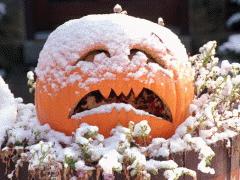
pumpkin

Buffy reminded me:

I cried over beautiful things knowing no beautiful thing lasts.

The field of cornflower yellow is a scarf at the neck of the copper
sunburned woman, the mother of the year, the taker of seeds.

The northwest wind comes and the yellow is torn full of holes,
new beautiful things come in the first spit of snow on the northwest wind,
and the old things go, not one lasts.

-Carl Sandburg

When I got off the train at the Nicollet Mall this morning the pavement was wet, the sky was gray and almost everyone had their head down. On Thursdays the mall is lined with booths from the Farmer’s Market, but today the sidewalks featured only wet clumps of leaves and hurried footsteps.

I thought of a poem I read last week entitled “Harvest”, the positive-sounding name given to a season beautiful and bittersweet. We focus on the harvest and try not to think about the reaping involved.

Harvest

It’s autumn in the market—
not wise anymore to buy tomatoes.
They’re beautiful still on the outside,
some perfectly round and red, the rare varieties
misshapen, individual, like human brains covered in red oilcloth—

Inside, they’re gone. Black, moldy—
you can’t take a bite without anxiety.
Here and there, among the tainted ones, a fruit
still perfect, picked before decay set in.

Instead of tomatoes, crops nobody really wants.
Pumpkins, a lot of pumpkins.
Gourds, ropes of dried chilies, braids of garlic.
The artisans weave dead flowers into wreaths;
they tie bits of colored yarn around dried lavender.
And people go on for a while buying these things
as though they thought the farmers would see to it
that things went back to normal:
the vines would go back to bearing new peas;
the first small lettuces, so fragile, so delicate, would begin
to poke out of the dirt.

Instead, it gets dark early.
And the rains get heavier; they carry
the weight of dead leaves.

At dusk, now, an atmosphere of threat, of foreboding.
And people feel this themselves; they give a name to the season,
harvest, to put a better face on these things.

The gourds are rotting on the ground, the sweet blue grapes are finished.
A few roots, maybe, but the ground’s so hard the farmers think
it isn’t worth the effort to dig them out. For what?
To stand in the marketplace under a thin umbrella, in the rain, in the cold,
no customers anymore?

And then the frost comes; there’s no more question of harvest.
The snow begins; the pretense of life ends.
The earth is white now; the fields shine when the moon rises.

I sit at the bedroom window, watching the snow fall.
The earth is like a mirror:
calm meeting calm, detachment meeting detachment.

What lives, lives underground.
What dies, dies without struggle.

“Harvest” by Louise Glück from A Village Life. © Farrar, Straus & Giroux, 2009.

Imagining a wild rumpus

by the Night Writer

It may be hard to believe, but I initially didn’t like to read when I was a boy. I don’t know why, but it just didn’t catch my fancy despite encouragement by my mother and grandfather. And then one day — I think in the third grade — I checked a book out of the school library, the classic by Maurice Sendak, “Where the Wild Things Are”. From the opening lines and drawings I was captivated. Who could forget, “On the night that Max wore his wolf-suit, and made mischief of one form or another, his mother called him ‘Wild Thing’ and sent him to his room without any supper.” How cool would it be to have a wolf suit? I always knew my bedroom walls could turn into a forest! And those beasts with huge eyes and feet — they had to have stepped right out of one of my dreams!

I think the book was what connected my imagination to my adrenal gland. I don’t know how many times I checked that book out of the library before I got a copy of my own as a gift but I would read that book and feel myself walking into the forest just as Max did. And then, coming back to find his supper waiting for him after all…there was something about that last line that so simply, yet eloquently, demonstrated the power of fantasy and how deftly it could be turned back into reality: “And it was still hot.” Shivers, to this day when I think of the perfection of that last line.

Naturally, WTWTA was a staple around our home as the Mall Diva and Tiger Lilly grew up. Both loved to be read to, and Tiger Lilly was especially taken with Sendak’s book. For a time her two favorite night-time stories were “Lawrence the Hedge-hog” and “Where the Wild Things Are.” Both were fabulous, but it did get a bit old to see her toddling toward me, holding one or the other book in her arms, wanting to be read to. One night, when she was two or maybe just turned three, she climbed up next to me on the couch with “Wild Things.” She wiggled in next to me and put the book in my lap and settled back. Upon opening the book, however, instead of reading, “On the night when Max wore his wolf suit…” I said, “If I were a brave hedge-hog,” thought Lawrence, “I would be at the Grand Hotel right now enjoying a piece of coconut-cream pie.”

Tiger Lilly immediately leaned forward, looked at the book, looked at me, and said, “NOoooo! Not Lawrence! Wild Things!” Another fan for life.

So there I was in a movie theater a month or so ago, about to watch the latest Harry Potter, I think, and suddenly one of the unmistakable wild things was larger than life on the big screen in front of me! My heart skipped a bittersweet beat. Immediately it was as if I was seeing an old friend, yet just as quickly cold fear set in as to what “they” might have done with “my” story. Was it a preview of a coming attraction or of coming angst? “Lord of the Ring” purists had nothing on me, except they were worried about what would be cut out of the bazillion page epic while I wondered what would have been added to the 40-some page touchstone.

Right now, that is unknown. But isn’t the unknown an essential part of any adventure?

I STILL don’t want to go on the cart

by the Night Writer

Okay, I’ve done this I Don’t Want to Go On The Cart post before and received some pretty interesting responses (and about 90% of the spam captured by my Akismet plug-in is aimed at that post). Now, via James Taranto and the Lumberjack, more tales of the “undead” just in time for Halloween:

Daughter saves mother, 80, left by doctors to starve
AN 80-year-old grandmother who doctors identified as terminally ill and left to starve to death has recovered after her outraged daughter intervened.

   Hazel Fenton, from East Sussex, is alive nine months after medics ruled she had only days to live, withdrew her antibiotics and denied her artificial feeding. The former school matron had been placed on a controversial care plan intended to ease the last days of dying patients.

   Doctors say Fenton is an example of patients who have been condemned to death on the Liverpool care pathway plan. They argue that while it is suitable for patients who do have only days to live, it is being used more widely in the NHS, denying treatment to elderly patients who are not dying.

   Fenton’s daughter, Christine Ball, who had been looking after her mother before she was admitted to the Conquest hospital in Hastings, East Sussex, on January 11, says she had to fight hospital staff for weeks before her mother was taken off the plan and given artificial feeding.

   Ball, 42, from Robertsbridge, East Sussex, said: “My mother was going to be left to starve and dehydrate to death. It really is a subterfuge for legalised euthanasia of the elderly on the NHS. ”

   Fenton was admitted to hospital suffering from pneumonia. Although Ball acknowledged that her mother was very ill she was astonished when a junior doctor told her she was going to be placed on the plan to “make her more comfortable” in her last days.

   Ball insisted that her mother was not dying but her objections were ignored. A nurse even approached her to say: “What do you want done with your mother’s body?”

   On January 19, Fenton’s 80th birthday, Ball says her mother was feeling better and chatting to her family, but it took another four days to persuade doctors to give her artificial feeding.

   Fenton is now being looked after in a nursing home five minutes from where her daughter lives.

   Peter Hargreaves, a consultant in palliative medicine, is concerned that other patients who could recover are left to die. He said: “As they are spreading out across the country, the training is getting probably more and more diluted.”

   A spokesman for East Sussex Hospitals NHS Trust, said: “Patients’ needs are assessed before they are placed on the [plan]. Daily reviews are undertaken by clinicians whenever possible.”

   In a separate case, the family of an 87-year-old woman say the plan is being used as a way of giving minimum care to dying patients.

   Susan Budden, whose mother, Iris Griffin, from Norwich, died in a nursing home in July 2008 from a brain tumour, said: “When she was started on the [plan] her medication was withdrawn. As a result she became agitated and distressed.

   “It would appear that the [plan] is . . . used purely as a protocol which can be ticked off to justify the management of a patient.”

   Deborah Murphy, the national lead nurse for the care pathway, said: “If the education and training is not in place, the [plan] should not be used.” She said 3% of patients placed on the plan recovered. !

Three percent of patients placed on the plan recovered…but they were very hungry!

It’s that time of year again

by the Night Writer

The Twins are once again in the play-offs and my wife and I are celebrating our anniversary. 22 years since the Twins made their first unbelievable run to the World Series and since we started a miraculous, have-to-be-seen-to-be-believed run of our own. Happy anniversary to my all-time best free agent acquisition and MVP!

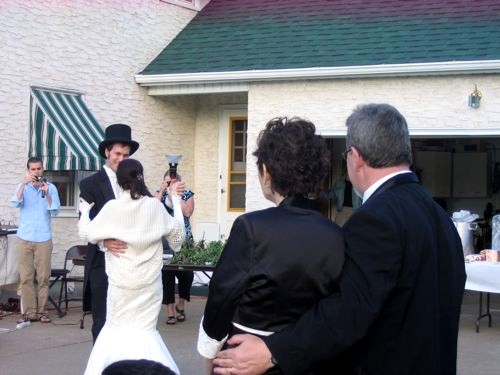
Typically I run some handsome photo of the two of us smiling at the camera. This year I’ll use a different perspective in showing one of the great accomplishments of our marriage:

Which headline is from The Onion?

by the Night Writer

Obama: Health Care Plan Would Give Seniors Right To Choose How They Are Killed

Obama humbled to win Nobel

Ok, the second one is obviously the fake. “Humble” is never used in reference to our president.

We should have seen this coming; after all, he closed Gitmo, got us out of Iraq and Afghanistan, has suceeded in getting Iran and North Korea to play nice and his policies have led to unprecedented domestic peace and harmony. So yeah, give him the Nobel Peace Prize.

In a related development, it’s another big garage sale weekend in my neighborhood. I’m going to see if I can’t get one of those Nobel prizes for myself.

Smoke, fire and angels

by the Night Writer

Four years ago a friend, fellow writer and co-worker of mine was nearly killed in one of the most devastating highway accidents in the history of Connecticut. Mark Robinson suffered severe injuries in the 20-vehicle pile up created when a fully-loaded, poorly maintained and uninsured Mack dump truck crashed into a double-line of cars waiting at a traffic light at the bottom of a hill. And he was a lucky one. Many other people died in the crash and conflagration, leaving him with a sense of loss and guilt and wonder at why he had been spared.

Mark and I both write things for a large financial services company. Our work is valuable enough to our employer I suppose, but little of what we do is going to change anyone’s life. That’s about to change for Mark. About six months after the crash I was talking to Mark about some momentary crisis in our corporate world and the conversation eventually turned to the new perspective he had gained as a result of what he’d been through, and the connection – and even the sense of responsibility – he felt for those who had been there that day. The idea of writing a book was banging inside of him. As he healed from his injuries and the wound in his soul, Mark set out to document what happened to him on that fateful day and, most importantly, to tell about the lives of those who were killed and of the dozens of bystanders and emergency personnel who courageously risked their own lives and health to try and save their fellow men.

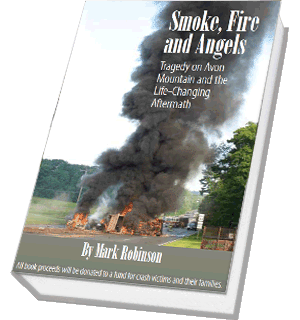
sfa-book-coverThat book has now just been published. Entitled Smoke, Fire and Angels – Tragedy on Avon Mountain and the Life-Changing Aftermath. All the proceeds of the book are going to the families of those who didn’t survive that day, who are struggling on without them. I’ll speculate that just getting this out there is all the benefit Mark needs; the opportunity is there, however, to benefit many others. Please go to the link above, review the information there and consider buyng a book or twelve. More details are in this video.

Thanks.

Working on those Night Memes

by Night Writer

Picked this up from Mitch at Shot in the Dark.

1. The phone rings. Who will it be? Nine times out of ten, someone wanting to talk to Tiger Lilly.

2. When shopping at the grocery store, do you return your cart? Well, I used to put the cart in one of the parking lot corrals. Now I’ve got “people” who get the groceries.

3. In a social setting, are you more of a talker or a listener? I used to be all talker, now I find myself listening more and picking my spots. For some reason, people seem happier to see me coming now.

4. Do you take compliments well? I take them well, medium and rare.

5. Do you play Sudoku? I’m a binge Sudoku player. I’ll go a long time not playing and then play madly for a time, then another long lay-off.

6. If abandoned alone in the wilderness, would you survive? As soon as I got that “hibernate” thing figured out I’d be cool.

7. Did you ever go to camp as a kid? One time, at band camp….no, never.

8. What was your favorite game as a kid? Depended on the season: in our neighborhood we played football in the fall, basketball through the winter and spring (shoveling snow off the asphalt driveways and getting our hands blackened from dribbling the ball on the wet tar). I was also addicted to the Sports Illustrated Football table game.

9. If a sexy person was pursuing you, but you knew she was married, would you? Absolutely…if it was my wife.

10. Could you date someone with different religious beliefs than you? How do you think I got where I am today?

11. Do you like to pursue or be pursued? Being pursued, I guess, but you might want to check out #15 first.

12. Use three words to describe yourself? I was wrong.

13. Do any songs make you cry? “I Wish You Where Here” by Claudia Schmidt and Sally Rogers.

14. Are you continuing your education? Who isn’t? Only the grades we get are different now.

15. Do you know how to shoot a gun? Revolver, semi-auto, shotgun and rifle. I would love to try a muzzle-loader and a fully-automatic some time.

16. Have you ever taken pictures in a photo booth? No, but I carry one of my wife and daughters acting silly.

17. How often do you read books? Every day.

18. Do you think more about the past, present or future? Yesterday I thought about the future. Today I think about the past. Tomorrow I’ll think about today.

19. What is your favorite children’s book? “Where the Wild Things Are” by Maurice Sendak.

20.What color are your eyes? Bluer than robin’s eggs, someone once said.

21. How tall are you? Not tall enough, according to my BMI.

22. Where is your dream house located? In the heather, in sight of the ocean.

23. If your house was on fire, what would be the first thing you grabbed? Either the kid holding the matches or my cell phone to call 911.

24. When was the last time you were at Olive Garden? Can’t remember. I like the place, but there are so many other options.

25. Where was the furthest place you traveled today? The day’s still young; we’ll see.

26. Do you like mustard? Absolutely, and I always like to try something new. Watch out for the bright yellow stuff in England, though. It looks just like French’s, but it’s not!

Of sex and taxes

by the Night Writer

Gerald Prante writing at the Tax Policy Blog examines a recent report published in the New England Journal of Medicine calling for a penny-per-ounce soft-drink tax to pay for the long-term health costs of obesity. According to the report’s authors, the soft-drink industry represents “market failures” — in the form of less-than-optimal production and consumption — that justify government intervention.

These failures have to do consumers not appreciating the connection between consuming sugar-sweetened drinks and their long-term health because they have a) imperfect information which leads to poor consumption decisions; b) their decisions are further distorted by advertising; c) consumers, especially children and adolescents, tend to make decisions based on immediate gratification and not on long-term consequences, and d) these consumers don’t pay the full cost of their decisions because it is passed on to the healthcare system, of which half the costs are paid by the public via Medicare and Medicaid.

Prante wonders, if those are compelling reasons to institute a soft-drink tax, why not apply the same logic to out-of-wedlock sex and tax that as well:

Based on these supposed market failures, I’d like to pose this question to the authors: If government had perfect information, would you support a tax on out-of-wedlock sexual behavior? And if we can’t do that for administrative purposes, couldn’t we impose a significant tax on nightclubs and bars as a second best scenario (kind of like how the authors of this report suggest an imperfect soda tax to fight obesity-related market failures)?

First, I can think of no other “market” in which imperfect information exists at such a prevalent level than that of sexual interactions. How many men and women have perfect information about their sexual partners, especially those on a random night that they meet at a nightclub or bar?

Second, I can think of no other “market” in which the problem of a person pursuing short-term gratification at the expense of possible long-term harm would exists to such a large degree as that in the area of sexual activity.

Finally, there are substantial medical costs from sexually transmitted diseases, the bulk of which persists in out-of-wedlock/multiple partner/sexually active persons. And many of these are borne by taxpayers via government health care expenditures.

And that doesn’t even take into account the costs to the public in terms of increased poverty and welfare which have been directly linked to out-of-wedlock births.

Of course, few would sit still for such a tax on one’s lifestyle, would they?

You know, we used to talk about the cost of our liberty being paid in the blood of our soldiers and citizens (and especially our citizen-soldiers); we appear to be heading into an era where our liberty will be determined by how much we cost the state.