My baby!

I’ve been known to get a bit misty at times as the Mall Diva has passed certain milestones in her life: first day of school, first prom, first blog, graduation, new job, etc. None of this has prepared me for the latest revelation, however…(cue “Sunrise, Sunset” music)…

I just realized this morning that in 2007 I’ll no longer be able to claim her as a deduction on my income taxes!

*SNIFF*

I…I…I think I need a Kleenex!

What makes a church?

The leadership of the Episcopal Church of America is finding that Biblical authority trumps church authority in the home of some of its oldest, largest and most influential churches. Over the weekend eight Northern Virginia churches, upset with the denomination’s decisions to ordain a gay bishop and sanction same-sex marriages, voted overwhelmingly to leave the Episcopal Diocese of Virginia and affiliate with the Convocation of Anglicans in North America (CANA), under the authority of a Nigerian bishop.

The departing congregations comprise about 10 percent of the diocese’s 90,000 members and about 17 percent of the 32,000 people in the pew on an average Sunday. Virginia Episcopalians have been in an ecclesiastical civil war since the 2003 consecration of New Hampshire Bishop V. Gene Robinson, an active homosexual, with the support of Virginia Bishop Peter J. Lee.

“I wasn’t at all surprised,” said Kim Cooke, a former vestry member. “This church has always made a point of being faithful to the Scriptures and God. When faced with a choice between man and God, it was an easy choice.”

“I am thrilled at the results,” longtime member Judy Thomsen said. “I think we need to move on.”

Doctrine is at the heart of the matter, but there are issues of authority and insubordination … and some very expensive real estate. The Episcopal Bishop of Virginia struck a strident note, saying there are “Nigerian congregations occupying Episcopal churches.” With respect to the bishop, next week it will be the same people sitting in the same pews as last week, inside the same buildings that have been there for decades (centuries in some cases), reading from the same Bible of the ages. The only thing that has changed are the philosophies of the denominational leadership that believes the will of God is determined by ballot rather than scripture; in turn their flocks have voted with their feet.

No doubt it will get ugly. According to Robert at The Llama Butchers, the Denomination is taking a hard-line with its rectors, insisting on obedience, with lawsuits, salaries and pensions at stake. Robert is a vestry-member at his Episcopal church in the Washington, D.C. area and his rector wants nothing to do with the dispute. Nevertheless, Rob feels he has to make a stand:

The Church has reached the point where each and every Episcopalian has to know exactly what is going on, in order to make for him- or herself a fully informed decision about where he or she is going to go. “Eyes front, mind your own business and do what you’re told,” is not, I think, the tone the Rector ought to be taking. And I also don’t think the parish should be relying on the Official Party Line as served up by the Rector as its sole source of news and opinion.

So. At tomorrow night’s meeting, I am going to propose that a committee be set up, the purpose being to gather and collate news and opinion pertinent to the Church’s ongoing controversies and to find means by which to disseminate such news to members of the congregation. I’m going to insist that such committee be independant of the Rector’s oversight or control and that its membership be politically and theologically balanced.

I am also going to get shot down in flames, of course. But I’m beginning to get angry enough that I don’t really care. If I can’t get official sanction for such a project, then I’ll do it off my own bat. And if I get threatened with personal liability as a vestryman for spreading alarum and confusion, I’ll quit and carry on as a private parishioner.

The Rector mentioned in an email to me the other day that he wanted to make sure my energies as a vestry member were being directed to areas for which I felt a passion. Well, dammit, I think I’ve found just the ticket.

God bless.

Friday Fundamentals in Film: Gene Kelly

I’m going to take a little bit of a different approach with this FiF entry in that I’m not going to delve so much into the character themes in a particular movie, but I do want to call your attention to some treasures you might be overlooking.

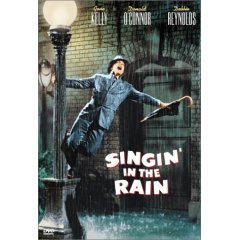
I was doing some channel surfing the other night and came across Singin’ in the Rain on the Turner Classics channel. It was close to the beginning of the movie and I’d only ever seen snippets of the film, so I put the remote down and the Mall Diva and I settled in to watch. I’ve always liked Gene Kelly’s athletic dancing style and good-guy persona so I expected to enjoy the movie. What I didn’t anticipate was how much the Mall Diva would like it!

The phrase, “they don’t make them like they used to” definitely applies to Singin’ in the Rain and similar movies of that era that used the story mainly to create a link between one singing and dancing number and the next. For that matter, the singing and dancing didn’t even have to have much to go with the movie or the story at all and this is especially true with Singin’ in the Rain (even the title of this movie has very little to do with the story itself; I think it mainly serves to let you know that this is the movie with the great sequence of Gene Kelly dancing down a city street in a rainstorm). That just serves to make the movie even more of a refreshing change of pace from today’s films. Of course, it helps a great deal that the singing and dancing itself is exceptional.


They don’t make them like that anymore — and they don’t need to because they did it right the first time.

Kelly, as I’ve said, is brilliant but SitR also features a young Debbie Reynolds and a truly amazing performance by Donald O’Connor. I didn’t have much of a conception of O’Connor other than his later “Frances the Talking Mule” movies so it was an unexpected delight to see what gifted singer, dancer and physical comedian he was. The Diva and I laughed outloud at several of his antics, especially in his tour-de-force performance of “Make ‘Em Laugh”. While the plot of the movie is a puffy confection, the entertainment value is very high. If you haven’t seen SitR, don’t dismiss it as being an “old” movie; I think you’ll be as delighted in the experience as my daughter and I were.

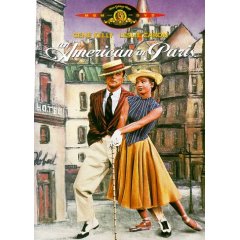
Also, I referenced Kelly’s good-guy persona earlier. I’ve watched several of his movies and always liked his characters (though they were usually just variations on the same). He always played a decent, honorable guy that you couldn’t help but root for. Also, from what I’ve read about him, it sounds as if Kelly was a decent and stand-up guy in real life as well. One of the pleasures of watching some of these old movies is that they could (and did) feature nice guy heroes without feeling an obligation to add some character flaw to make him “real”. Okay, that may be necessary in dramas, but I can appreciate good schmaltz, too (which reminds me of the “Schmaltz Waltz” number in Kelly’s An American in Paris. In fact, a Gene Kelly trilogy of Singin’ in the Rain, An American in Paris and Brigadoon would be a nice collection for a film fan’s shelf (tough as it is to leave out Anchors Aweigh or On the Town).

I’m not saying that all old movies are great and all new movies are crap; there’s good and bad in every era. Truly good things, however, transcend eras and hold up. If you want an entertaining and uplifting diversion that leaves you feeling good about yourself and others then I highly recommend these three films.

“Leaf us alone,” head of lettuce group warns

Des Moines, Iowa – “It was the worst experience of my life,” said Cyrus Greenleaf, head of Vegetables Entitled to Respect and Green Equality (VERGE) after he and several other heads of lettuce, as well as several pounds of spinach and green onions, were abruptly tossed from a local grocery store after shoppers and USDA officials became concerned that the group was potentially carrying E.coli bacteria.

Consumers have been on high alert lately following recent news stories and studies linking green vegetables such as lettuce and spinach to E.coli outbreaks. Speaking on behalf of his group, Greenleaf claimed that he and his friends were victims of “veggie-profiling” and that they were being singled out for “traveling while green.”

“This is obvious vegetarianism,” he said. “The public and the administration gets its undies in a bunch and suddenly it’s ‘E.coli this’ and ‘E.coli that.’ It’s simply easier to blame somebody than to address the root causes. I blame the American culture; people in this country learn to hate green vegetables when they’re young and then when they get older you shouldn’t be surprised when their prejudice crops up. Green vegetables are peaceful and nutritious; these latest charges are harassment, plain and simple.” Greenleaf indicated that the group may seek redress in the courts.

While definite links between vegetables and illnesses such as E.coli, salmonella and hepatitus have been discovered, there is still some uncertainty about the organic nature of the threat, even among government officials. For example, when asked recently whether lettuce or spinach posed a greater threat, incoming chairman of the House Intelligence Committee, Silvestre Reyes, said, “I don’t know, I have a hard time telling one from the other.”

Meanwhile, both the FDA and the USDA encourage consumers to be alert, saying they are the best line of defense against E.coli attacks and other terra-ism. “Not all vegetables have E.coli, but all the latest E.coli carriers have been vegetables,” said Brad LeBeouf, a spokesman for the USDA.

Oooo, we wants it


Hat tip to Port McClellan for calling my attention to Steven Pressfield’s book The Afghan Campaign, a historical novelization of Alexander the Great’s war in Afghanistan and part of the Claremont Institute’s annual Christmas Book recommendations. I loved Pressfield’s Gates of Fire novel about the battle of Thermopylae and I admired his story-telling craft in his book Tides of War, though I never warmed to its main character, Alcibiades. (Pressfield also wrote the charming and somewhat mystical book, The Legend of Bagger Vance.)


I am totally up for reading his novelization of Alexander’s misadventure among the Afghans — and why shouldn’t I be? Here’s Claremont president Brian Kennedy’s description of Pressfield: “Think Victor Davis Hanson meets Mark Helprin.” Helprin is my favorite author and VDH is working his way up my list. I trust Pressfield’s research and attention to detail, and the subject is very topical. I look forward to putting this book “On the Nightstand”.

Inspired by “A Christmas Story”

How many of you have seen the movie A Christmas Story? Well, I just saw it last night for the first time (I know, it’s shocking), and I’m going to blog about what happens at our house around Christmas time.

Christmas lists
About a month before Christmas, the phrase around our house uttered by the Reverend Mother is, “Kids! Get your Christmas lists written!” I always get mine written right away, but MD and Bonita have trouble getting theirs together. I wonder why….

Wrapping gifts
It’s a family tradition to wrap presents in Reverend Mother and The Old Man’s (a.k.a. Mom and Dad) room. So as we all vie for wrapping space, the words are, “-family members name- don’t come in here!” But after the hustle of shopping and wrapping we come to:

Presents
You remember that Ralphie wanted a Red Ryder Air Rifle, right? Well, my Red Ryder Air Rifle is actually a laptop computer that is perfect for playing computer games on. But, instead of it being “You’ll shoot your eye out,” it’s “That’s way too expensive.” Tthhpptt. Maybe ‘The Old Man’ had one as a kid….

Concerning the Christmas tree.
When we get a Christmas tree, we let it sit around for a few days before putting it into its little stand and watering it. It’s like the tree must face ‘The Challenge of Dryness’ before it can become part of the décor before it gets thrown out six weeks later.

Family from out-of-town
My Grandma lives in Oklahoma, so she stays at our house when she comes. An aunt and uncle and 2 cousins also live down there, so they will come to live at our house as well. But not this year, because they are going somewhere else.

Leg-shaped Lamps
We don’t have any leg-shaped lamps, thank you!

And, finally:

Christmas Day
At last, the blessed day has arrived! As soon as MD and I wake up, we bound out of bed and run downstairs to grab the stockings off of the fireplace. Then we run back up the stairs to the Reverend Mother and The Old Man’s room and open them. We bask in the glory of the Sacred Stocking Stuffers, then run down stairs to the tree. MD and I will fish presents out and give them to their respective owners, then we organize a little. We’ll take turns opening one present at a time, savoring the moments.

After the wonderfulness of opening presents, we rush to shower and clean the house, because the family is coming over! (They always come over to our house because it’s the biggest.) Around 1:00 people start arriving! We eat lunch, then more presents! After all that, my cousin and I will run downstairs so he can play on the computer (he doesn’t have any cool games of his own, so he uses ours).

I don’t have a weird aunt who thinks I’m 4-years-old and a boy, so no weird pajamas are in the present boxes. Thank the Lord for that!

Ciao for now!

Filings: Warp factor

Yesterday’s post about extremism and the ensuing comments got me to thinking again about the culture wars. I remembered how my family used to make it a point to watch “Star Trek: the Next Generation” when there were still new episodes. We loved the characters and the writing, the imagination and the mostly discrete sexuality of the show. It also had a very edifying vision of human virtue and potential.

The only problem I had with the program was that this vision of human potential was based on the Secular Humanist views of its creator, Gene Roddenberry. Yes, we would all like to live in a world where everyone demonstrates love, joy, peace, patience, kindness, goodness, faithfulness, gentleness and self-control as the characters in ST:TNG did. Roddenberry, however, saw this occurring through self-directed human evolution while I, as a Christian recognize these traits as fruit of the spirit imparted by God and developed through a personal commitment to renew my mind as I transform myself in order to be more like Jesus.

It may appear that the Christians and Humanists have a similar vision. There is a difference in how we go about fulfilling that vision, however.

As a Christian, I use God’s word as a standard to strive for and measure myself against. It’s not based on feelings, polls or my own thoughts about what is right and what is wrong. Today’s culture may hold out a vision of ennobling evolution — while at the same time saying that any type of standard (except for their own) is merely a prejudice. Maybe that’s why I as Christians can hope to see a change in myself within my lifetime, while Roddenberry’s super-humans don’t get it until the 25th century.

I see the human soul as being made up of our mind, will and emotions — and as being something that needs to be disciplined in order to exalt God. It seems to me that Humanists see the soul as the thing to be exalted – and that excellence can be achieved by indulgence. My focus is to improve the individual so the individual can effect society; Humanists try to change society so that it can affect the individual. They label as intolerant, unprogressive and “out of the mainstream” any discussion of morality when it comes to personal behavior and responsibility (except when they refer to what you do with your wealth and private property). Meanwhile, you can do whatever you want with your body, or whoever else’s body you can get to along with your program.

Let me, finally, get to the point. Despite my self-indulgent and even extremist rant, the Humanists are really irrelevant to a Christian’s own spiritual growth. Sure, they may pollute the culture with their illogical approach, but even if we “win” the cultural and political war we gain little but breathing room. That’s because Christ’s example is always from the “inside out.” While I would like to see a day when the culture around us is more wholesome, that in and of itself will not release us from our spiritual obligation to become more like Christ and to continually work out our salvation. In fact it may even invite a complacency that could be terminal — to us and ultimately to our culture.

Our individual commitment to tending the fruit of the spirit in our own lives — and to helping these develop in other people’s lives — must be unchanged regardless of what is going on around us, no matter how good or how bad it looks. We cannot look back longingly for “the good old days” or wait expectantly for the wonders of the 25th century because Christ is the same yesterday, today and tomorrow. “What would Jesus do?” is the wrong question. Better for me to ask, “What is Jesus doing?” and make sure I’m a part of it.

Filings is an ongoing section of this blog where the posts focus specifically on issues of Christian life. The name comes about because “filings” are the natural by-product of Proverbs 27:17: “as iron sharpens iron, so one man sharpens another.”

Extremely interesting

I recently acquired a book entitled “A Year With C.S. Lewis” which features short, daily excerpts from many of his great works. I thought this morning’s excerpt was especially apt.

It’s from The Screwtape Letters, the book where Screwtape, a senior demon in Hell, counsels his young nephew, Wormwood, on how to best distract and deceive the human he’s been assigned. This particular missive focuses on the value of extremism in faith … or by extension, politics…football…blogging…

To the Extreme
Screwtape explains the usefulness of extremism:
I had not forgotten my promise to consider whether we should make the patient an extreme patriot or an extreme pacifist. All extremes, except extreme devotion to the Enemy, are to be encouraged. Not always, of course, but at this period. Some ages are lukewarm and complacent, and then it is our business to soothe them yet faster asleep. Other ages, of which the present is one, are unbalanced and prone to faction, and it is our business to inflame them. Any small coterie, bound together by some interest which other men dislike or ignore, tends to develop inside itself a hothouse mutual admiration, and towards the outer world, a great deal of pride and hatred which is entertained without shame because the ‘Cause’ is its sponsor and it is thought to be impersonal. Even when the little group exists originally for the Enemy’s own purposes, this remains true. We want the Church to be small not only that fewer men may know the Enemy but also that those who do may acquire the uneasy intensity and the defensive self-righteousness of a secret society or a clique. The Church herself is, of course, heavily defended and we have never yet quite succeeded in giving her all the characteristics of a faction; but subordinate factions within her have often produced admirable results, from the parties of Paul and of Apollos at Corinth down to the High and Low parties in the Church of England…

Wombs with a view

Football wasn’t the only thing on the tube yesterday as I found myself pulled away from ESPN and NFL Network game highlights to watch the National Geographic Channel’s program, “In the Womb: Animals.” Using the latest 4D ultrasound imaging, state-of-the-art cameras and computer graphics the 2-hour program took us through the stages from conception to birth of yellow labradors, elephants and dolphins as they developed in their mothers’ wombs.

The elephant goes from a single cell to a 260+ pound “baby”; the dolphin learns to swim before it is born and the dog also showed full-grown dog behavior while still in utero. The film work, showing color and movement, is spectacular and engrossing (and sometimes just gross, based on some of the Mall Diva’s reactions). When you see the amazing close-ups and sharp detail of these developing species it is impossible not to think about the implications if the National Geographic Channel should devote the same study to comparable stages of human babies — pardon me, fetuses. As I watched the program I even thought outloud how great it would be if they used the same technology to cover human development, but I figured that would be anathema to contemporary thought and too controversial. Still, I was happy that this program was available as it couldn’t help but make anyone watching it pause to think.

I was therefore pleasantly surprised — nay, thrilled — to learn that NGC in fact had already kicked off their series back in November with a study of human infants in the womb, and is planning to carry another “In the Womb” program in January featuring the development of human twins (maybe even triplets), including film of the unborn children playing, fighting and cuddling. (More details here). I’m definitely going to check my listings for repeats of the first show and the broadcast schedule for the upcoming one.

The footage in these programs is absolutely devastating to the “blob of tissue” arguments that persist mainly because people don’t want to — or haven’t been able to — see the truth for themselves. There’s also something else in last night’s program that was plain to see: intelligent design.

While the narrator went on and on about evolutionary development and millions of years of random coincidences that led to these “miracles of birth” in each of the animals, when you see the process up close like this — and give it even a moment’s thought — it’s impossible (for me, anyway) to believe each of these tiny but crucial steps could have happened by accident. For example, how does a dog’s uterus “know” how to contract in such a way as to place and attach each puppy embryo an equal distance apart inside its walls? Yes, I know what the evolutionary models (and the narrator) say, but to cling to that despite the evidence of my own eyes seems to require an even greater leap of faith than what my superstitious mind is accused of making. But that’s just me; you can come to your own conclusions. The important thing is that you take the time to watch this incredible series for yourself.

Note: how detailed is 4D ultrasound imaging? Here’s a sample (the images and in utero photography on the NGC program are even more dramatic). You can see more images like this over here.