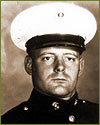
Memorial Day: Congressional Medal of Honor Winner Jedh Colby Barker


JEDH COLBY BARKER

Born: June 20, 1945

War: Vietnam

Rank: Lance Corporal, U.S. Marine Corps

Location of Action: Near Con Thein

Date of Action: September 21, 1967


Official Medal of Honor Citation: For conspicuous gallantry and intrepidity at the risk of his life above and beyond the call of duty while serving as a machine gunner with Company F.


During a reconnaissance operation L/Cpl. Barker’s squad was suddenly hit by enemy sniper fire. The squad immediately deployed to a combat formation and advanced to a strongly fortified enemy position, when it was again struck by small arms and automatic weapons fire, sustaining numerous casualties. Although wounded by the initial burst of fire, L/Cpl. Barker boldly remained in the open, delivering a devastating volume of accurate fire on the numerically superior force.


The enemy was intent upon annihilating the small marine force and, realizing that L/Cpl. Barker was a threat to their position, directed the preponderance of their fire on his position. He was again wounded, this time in the right hand, which prevented him from operating his vitally needed machine gun.


Suddenly and without warning, an enemy grenade landed in the midst of the few surviving marines. Unhesitatingly and with complete disregard for his personal safety, L/Cpl. Barker threw himself upon the deadly grenade, absorbing with his body the full and tremendous force of the explosion. In a final act of bravery, he crawled to the side of a wounded comrade and administered first aid before succumbing to his grievous wounds.


His bold initiative, intrepid fighting spirit and unwavering devotion to duty in the face of almost certain death undoubtedly saved his comrades from further injury or possible death and reflected great credit upon himself, the Marine Corps, and the U.S. Naval Service. He gallantly gave his life for his country.


This and other Congressional Medal of Honor citations may be found at Military Connections.

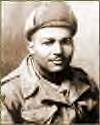
Memorial Day: Congressional Medal of Honor Winner Cornelius H. Charlton


CORNELIUS H. CHARLTON
Born: 1929
War: Korea
Rank: Sergeant, U.S. Army
Location of Action: Near Chipo-ri
Date of Action: June 2, 1951


Official Medal of Honor Citation: Sergeant Cornelius H. Charlton, Infantry, United States Army, a member of Company C 24th Infantry Regiment, 25th Infantry Division, distinguished himself by conspicuous gallantry and intrepidity above and beyond the call of duty in action against the enemy on 2 June 1951, near Chipo-ri, Korea.

His platoon was attacking heavily defended hostile positions on commanding ground when the leader was wounded and evacuated. Sergeant Charlton assumed command, rallied the men, and spearheaded the assault against the hill. Personally eliminating two hostile positions and killing six of the enemy with his rifle fire and grenades, he continued up the slope until the unit suffered heavy casualties and became pinned down. Regrouping the men he led them forward only to be again hurled back by a shower of grenades.

Despite a severe chest wound, Sergeant Charlton refused medical attention and led a third daring charge which carried to the crest of the ridge. Observing that the remaining emplacement which had retarded the advance was situated on the reverse slope, he charged it alone, was again hit by a grenade but raked the position with a devastating fire which eliminated it and routed the defenders. The wounds received during his daring exploits resulted in his death but his indomitable courage, superb leadership, and gallant self-sacrifice reflect the highest credit upon himself the infantry, and the military service.


This and other Congressional Medal of Honor citations may be found at Military Connections.

Job Applications

A recent post by King Banaian at SCSU Scholars and Thursday’s Backfence from Lileks in the StarTribune have had me thinking about the various jobs I held when I was younger and the things I learned before I snagged the college sheepskin.

My introduction to the workforce came when I was 12 and started pumping gas at my father’s service station. These were the days when a service station really meant service, not “self-service.” We washed windows, checked the oil and sometimes the tires, and tried to mollify customers upset when the price went up from 34 to 36 cents per gallon overnight. After a busy summer day it would seem as if I could still hear the driveway bell ringing in my ears. I remember the heat of accidentally laying my bare arm on a blisteringly hot piece of chrome and the chill of gasoline splashing on my leg, and standing on tiptoes to reach the last blob of bug guts in the middle of a windshield.

This was also where I learned that a screw-up by me or one of the other pump jockeys reflected on the man who’s name was on the business, and it was drilled into me how important it was to remember customers’ names, to meet and even anticipate their needs and to build repeat business. In contrast, several years later I went to work for a gas station located on an interstate instead of a neighborhood, and went about my job the first day in the way I had been trained. After about an hour the owner called me over and profanely asked me what I thought I was doing washing windows and talking to people. “Give ’em their gas, get their money and get them out of here to make room for the next guy,” was the gist of it. “You’re never going to see these people again,” he said.

In between those jobs I took a position as a lifeguard at a municipal pool in a small town. I’d already had Red Cross training and I was told it was an easy job sitting in the sun where you were supposed to watch girls. Sounded good to me…except that it turned out that anyone over the age of 12 in that town swam in the river and the young ones who came to the pool were trying to stay in training over the summer for annoying their teachers. I also learned that no matter how I sat, or what lotion I used, I was almost incapable of tanning and that no one trusted a pale lifeguard.

I lasted a month and then took a job on a county road crew cutting brush and repairing pot holes. Here I discovered that I’m not allergic to poison ivy and that ticks can get into the darndest places. Once, when I swung my brushhook into a leafy trunk I cut through an unseen piece of barbed wire which, released from tension, whipped out and sliced through the sleeve of my tee-shirt, leaving me an impressive scar on my bicep that I could later tell my children I received in a knife fight (and watch their eyes get as big around as some of those engorged ticks). I also did stints driving anchor rods into the ground for mobile homes with an 8-lb. sledge hammer or, if the ground was especially rocky, a 20-lb. post maul. A couple of times I also found myself standing on the roof of a mobile home, applying KoolSeal coating to the shiny, aluminum skin in the summer heat while the soles of my sneakers fused with uncoated parts of the metal.

Believe me, this was one kid who never had a problem going back to school in the fall.

Even this wasn’t much of an escape. One Saturday morning when I was home from college my father asked me what my future plans were and how far I wanted to go with my education. Then he said he was going to help me get a PhD – and took me out to the back yard and handed me a post hole digger.

What does it all mean? I don’t know. Sometimes those days come back to me when I feel an ache in my fingers as I squeeze the handle of the gas pump when I fill my own car, or finger the scar on my arm. I know those jobs marked me in subtler ways as well. I’m not nostalgic about them, but they do help me appreciate what I have. I remember that putting others first is ultimately how you build a successful business, that even the biggest job can be whittled down to size if you just keep hacking, that a sledge hammer can get you a better night’s sleep than a spreadsheet. And I know I will never take another job that involves wearing a swim suit.

We, the Jury

Historical note: 218 years ago today the Constitutional Convention got underway at Independence Hall in Philadelphia. The convention did away with the original Articles of Confederation and replaced them with our Constitution. Thanks, guys!

There has been much debate and concern lately about judges having the authority to override the will of the people as reflected in the legislative process. Not much has been said about the power of the people as represented by a jury to overrule judges.

I just finished conducting a seminar on Constitutional myths and facts. One of the items we covered was the court system and an individual’s right to a jury trial in both criminal and civil court. Why was jury trial so important to the founders that they felt they needed to secure it for civil offences and other particulars in the Bill of Rights? (link)

The Constitution, Article III, Section 2, Paragraph 3:
The Trial of all Crimes, except in Cases of Impeachment, shall be by Jury; and such Trial shall be held in the State where the said Crimes shall have been committed; but when not committed within any State, the Trial shall be at such Place or Places as the Congress may by Law have directed.

The Bill of Rights:
Amendment VI
In all criminal prosecutions, the accused shall enjoy the right to a speedy and public trial, by an impartial jury of the State and district wherein the crime shall have been committed, which district shall have been previously ascertained by law, and to be informed of the nature and cause of the accusation; to be confronted with the witnesses against him; to have compulsory process for obtaining witnesses in his favor, and to have the Assistance of Counsel for his defence.

Amendment VII
In Suits at common law, where the value in controversy shall exceed twenty dollars, the right of trial by jury shall be preserved, and no fact tried by a jury, shall be otherwise re-examined in any Court of the United States, than according to the rules of the common law.

Amendment VIII
Excessive bail shall not be required, nor excessive fines imposed, nor cruel and unusual punishments inflicted.

I propose that it is because the founders were concerned that judges would eventually usurp the true power of the jury.

Historically the principle of common law jury or trial by country has ruled. This was first established on June 15, 1215 at Runnymede, England when King John signed the Magna Carta. The first Supreme Court Justice, John Jay, put it best when he said, in the case of George Vs Brailsford (3 Dall 1):

“It is presumed, that juries are the best judges of facts; it is, on the other hand, presumed that courts are the best judges of law. But still both objects are within your power of decision … you have a right to take it upon yourselves to judge of both, and to determine the law as well as the fact in controversy.”

Many today are not aware that that right is afforded to a jury. As recently as 1972, however, the U.S. Court of Appeals ruled that the jury has an “unreviewable and irreversible power – to acquit in disregard of instructions on the law given by the trial judge.”(US vs Dougherty, 473 F 2d 1113, 1139).

If a jury feels a law is unjust the jury has the power to acquit. This was also the decision in the appeals of US vs Moylan, 417 F 2d 1002, 1006 (1969). Additionally, on June 24, 2004 the Supreme Court ruled that a judge couldn’t boost a sentence with out the jury weighing in. This in itself brings forth the fact that jurors need to be aware of their duties and rights.

Why have you not heard of these duties and rights? Because it is the citizen’s responsibility to know the rights and duties of being a juror.

Let’s look again at US vs Dougherty. Another quote from this 1972 case was: “The fact that there is widespread existence of the jury’s prerogative, and approval of its existence as a necessary counter to case hardened judges and arbitrary prosecutors, does not establish as an imperative that the jury must be informed by the judge of that power.” This is not surprising when you look back to 1895 and the case of Sparf vs US (156 US 51). The court ruled that although juries have the right to ignore a judge’s instruction on the law, they do not have to be made aware of their right to do so.

As a citizen you also need to be aware that there are efforts to keep those with this knowledge out of the jury box. We as concerned citizens can learn about those tactics by learning about court procedures. This information can be found in the “Advanced Trial Handbook” produced by Ervin A. Gonzalez and available here.

Be prepared the next time you are called for jury duty or in a court of law. You may save yourself or someone else from pain and suffering.

If you want to know more about your rights and duties as a juror review other sources here and here.

Be Blessed!

All Rise

Scott at Powerline posted this tribute from Justice George Nicholson of California’s Third Apellate District Court of Appeal to Presiding Judge Robert K. Puglia, who recently passed away. Included in the account is the moving and personal eulogy that was delivered at his funeral by California Supreme Justice Janice Rogers Brown, whose District Court nomination will soon be debated in the U.S. Senate. Her words help us know the man – and her – so much better, and is well worth reading.

Scott’s post also includes the famous “Freedom Is Not Free” speech Justice Puglia gave to the San Joaquin County Bar Association, the last paragraph I’ve excerpted here:

The rule of law relies on a fragile consensus, which remarkably has endured and allowed us, uniquely among the nations of the world, to live as free people for more than 200 years. It is the guarantor of our freedoms. It emits the glow that illuminates the shining city on the hill, the glow that is never so brilliant as when contrasted to the ominous shadows cast by the brutal tyrannies which have threatened our national existence in this century. More than anything else, the rule of law is at the heart of American exceptionalism. That is the unique place that America occupies among the community of nations.

If your faith in our judicial system and its judges has been diminished by the political circuses of late, reading the Powerline post can be very encouraging.

The Old Ball Game

Last night you had two teams that really don’t like each other go at it again. The team ahead in the standings looked to be a clear cut favorite, but a combination of poor clutch hitting, base running errors and the veteran team leaders looking like overmatched rookies let them snatch defeat from the jaws of victory.

But enough about the Senate. Did anyone hear how the Twins did last night against Cleveland?

What the Eck?

What do Luke Skywalker, Adolf Hitler and Eric Draven from The Crow have in common?

Read Kevin Ecker’s responses to my five “interview me” questions over at The Eckernet and find out as we take a tour through the mind of someone who was blogging before there were blogs.

Please, no flash photography and for your own safety, stay inside the velvet ropes.

(Re)Live Blogging the MOB at GCFB

No, I didn’t live blog the St. Cloud MOB gathering at Granite City Food & Brewery because putting a computer screen in front of my face is like throwing a high, outside fastball to Torii Hunter. We both know we should resist, but we can’t help ourselves and we forget about everything else. If I was going to get sucked into anything Saturday night I wanted it to be the dynamic conversations of fellow MOBsters released from their basements. So, on a type-delay basis, here are my observations from the evening.

One, the Queen Banaian does not take a backseat to King in encylopedic knowledge or sparkling conversation. It was a delight to meet her and we enjoyed a stimulating discussion that ranged from soy cooking to the theatre, The Rules and, of course, The Mystery. My wife especially enjoyed the evening, while the Littlest Scholar and my youngest daughter found the most interesting part of the event to be the arrival of a hulking piece of Triple Chocolate cake – which they proceeded to demolish like Mitch Berg going through a Nick Coleman column. The flying forks looked like a light-saber duel from Revenge of the Sith.

Another plus of our fortuitous introduction was that Mrs. Scholar and Night Visions, poised at the twin entrances to our circular booth, were effective pickets against Kevin’s efforts to buy beer for my oldest daughter. I finally helped him see reason: whatever threat I represented paled in comparison to what the management and the thirsty people of St. Cloud might do to him if he caused GCFB to lose its liquor license. At least that kept him busy until Cathy in the Wright (aka St. Kate from the MAWB Squad) could hit him – really hard. I don’t know what that was about, but I think Cathy may sense that the Force is strong in my daughter and wants to talk to her about world domination.

Of course, the main appeal for an event like this is to meet the people behind the blogs I read, like fellow Mizzou alum Phil from Market Power, who brought me the distressing news that The Old Heidelberg – a campus tavern known in my day for its fried mushrooms and don’t ask, don’t tell approach to the 21-year-old drinking age – had burned down (and fortunately rebuilt). Phil is an economics prof at Mankata State and I thought it would be interesting to get he and King together to do an Iron Chef-type face-off on the ripple effect of a 10 cents per gallon increase in the gas tax, but no one else seemed to think this a good idea.

It was also fun to see the faces and feel the handshakes behind Heavy-Handed Politics (firm, but not crushing as you might expect) and Speed Gibson (a fellow Powerblogs user) and Martin Andrade, not to mention Flash from Centrisity.

A real highlight, however, was the chance to meet my Blog Buddy, Leo, from Pscymeistr’s Ice Palace – a guy I never would have known if not for blogging but whose writing and insights I really appreciate – but not as much as I appreciate the encouragement he’s given me.

Thanks, King, for organizing the evening and I look forward to seeing (and recognizing!) you and the other MOB members at future events!

Passing It On: The “Interview Me” Meme Points to the Eckernet

Apparently my leverage as “Eckernet Reader of the Month” was enough to induce Kevin to volunteer for a turn in the bright lights of the “Interview Me” meme. I would have posted the questions sooner but I wanted to build traffic to my site by having Kevin check back repeatedly.

So, Kevin, here are your five questions. (Other readers may feel free to play along and post your answers to these questions in the Comments or on your own blog). I’ll look for and link to your replies!

1. You have been referred to by some as “Young Jedi.” Are you really like Luke Skywalker, or are you more Han Solo or … Boba Fett?

2. What is the first book you read that affected the way you look at the world, and how? What type of books do you seek out now for your own entertainment or self-directed education?

3. How long have you been blogging and what were your objectives when you started? Have your reasons for blogging changed since you began? What has been the most surprising thing to you about blogging?

4. If you could have been an actor in any movie you’ve seen, what movie would it be and what character would you have played?

5. Describe the best day of your life so far.

(HT to Blogizdat for launching this meme.)

Oh, Theocracy!

There is much consternation, if not outright (outleft?) hysteria in the MSM of late regarding America’s imminent theocracy. Indeed, in reading Maureen Dowd, Frank Rich, Paul Krugman or the rendering unto seizure that took place on the cover of Harper’s it appears that the only uncertainty is whether or not theocracy is about to take over or if it already has.

All I can say is that if that rapturous moment has occurred I must have missed it … and you might imagine my disappointment.

And if their vision of theocracy were truly upon us I don’t think you’d see such open assaults where people of faith are compared to either the Taliban or the Nazis, which is interesting bit of name calling projection. Last I looked, it wasn’t Christians who were going around trying to tear down religious monuments in front of City Hall, or acting like Brown Shirts intimidating others by throwing pies and trying to shout down opposing points of view. In fact the vilification – or demonization, if you will – through outrageous and even libelous hate speech of a particular group of people because of their religious beliefs just sounds so, oh, 1934, don’t you think?

Yet for all their cries of oppression where they see religion crossing the line into areas they think should remain secular, the Secularists have no qualms about trying to enforce the secular on what others see as sacred. They will brook no criticism of their own ideals and insist they are being persecuted while simultaneously criticizing and undermining religious leaders (e.g., deriding the Pope as being too conservative, encouraging the Rainbow Sash escapades, trying to redefine marriage). Funny – Hitler persecuted and/or arrested German theologians who opposed him on spiritual grounds such as Niemoller, Bonhoeffer, and Barth and reconstituted the German church with officials willing to replace the Father with the Fuehrer. I read somewhere that that didn’t turn out so well.

Here’s the deal: this is really an old conflict – even older than WWII. (Public service announcement: Warning – scripture reference coming. Avert your eyes if sensitive to this type of material). Romans 12:2 tells believers not be be conformed to the world, but transformed by the renewing of our minds. It is the conflict of the outside world (which touches our flesh) and the inner man or woman (which is touched by the spirit). The secular world is all about forcing people to conform to their vision; the spiritual instinct is to see people transformed by God. And if they happen to change the way they vote as a result of that transformation, well, that’s part and parcel of free will.

Secularists want the government to run things, which is why they get so concerned about who runs the government. (Even though what they really want is to be a law unto themselves). In their quest they want to run everything – schools, public square, social institutions and come against any who say they are not beholden to these or recognize a higher authority. That’s because those who obey an authority higher than the government are more likely to cherish their individual right to their own conscience – and the renewed mind resists the old and does indeed become a law unto itself.

And frankly, I don’t think that that is such a scary concept to most people, as I described here a couple of weeks ago. It certainly wasn’t a scary thought to the founding fathers, as former New York Times reporter John McCandlish Phillips noted so well in the Washington Post (When Columnists Cry “Jihad!” – HT Michelle Malkin):

The fact is that our founders did not give us a nation frightened by the apparition of the Deity lurking about in our most central places. On Sept. 25, 1789, the text of what was later adopted as the First Amendment was passed by both houses of Congress, and subsequently sent to the states for ratification. On that same day, the gentlemen in the House who had acted to give us that invaluable text took another action: They passed a resolution asking President George Washington to declare a national day of thanksgiving to no less a perceived eminence than almighty God.

That’s president , that’s national, that’s official and, alas, my doubting hearties, it’s God; all wrapped up in a federal action by those who knew what they meant by the non-establishment clause and saw their request as standing at not the slightest variance from it. It’s a pity our phalanx of columnists cannot crawl into a time machine to go back and reinstruct them.

Related posts from other sources:
Flown to the Roll: A Glittering Jewel of Ignorance.

Bogus Gold: “Dispelling the Theocracy Myth and Its Defenders” and “Sullivan, Goldberg and Theocrats, Oh My!”

Fox News: Lawmaker Hopes to Open Churches to Political Speech