I saw the light

Via The Llama Butchers, by way of CalTech Girl, who got it from LadyGunn, who may have found it laying in a manger:

How Many Christians Does It Take to Change a Light Bulb?

Go to CalTech Girl to see her own Orthodox addition to the list and an entry from a commenter describing the experience for Non-denominational Evangelicals.

Best not to ask what was in the breakfast cereal

The news of new MOB Deputy Mayor Fluffenstuff reminded me of the time a couple of years ago when the Mall Diva and I were doing some late night channel surfing. An episode of the Krofft Brothers HR Pufnstuff show suddenly appeared.

“Oh, wow,” I said. “I remember watching this when I was a kid! It was kind of weird, but fun and pretty popular.” We stopped surfing and let the show play out a bit. After 10 minutes MD turned to me in all seriousness.

“Drugs were a real problem back in the 70s, weren’t they?”

I told her I couldn’t remember.

This was not a hallucination.

Hmmm, I do recall, however, that HR Pufnstuff was the mayor of an alternative reality island. Whoa, and Doug is mayor of the MOB, an island of reality in an alternative universe. Heavy, man, heavy; hey, don’t bogart the magic flute!

Btw, there is a HR Pufnstuf blog.

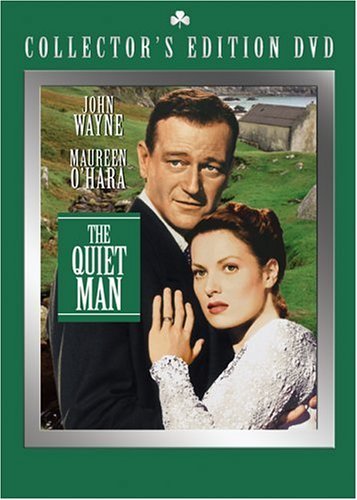
Friday Fundamentals in Film: The Quiet Man

I can’t believe I missed the opportunity last Friday, St. Patrick’s Day, to feature John Ford’s The Quiet Man, a classic Irish tale and my favorite John Wayne film. Oh well, like the train to Castletown, better late than never.

This is a delightful and beautifully photographed movie with great performances by Wayne, Maureen O’Hara, Ward Bond and the quirky Irish cast. The depiction of the Irish as colorful but short-tempered folk much given to drinking and fighting is perhaps a bit politically incorrect in this day and age, but very entertaining and as it is Ford’s tribute to his homeland, though I’m not Irish, it gets a pass from me (not unlike Tim Story’s effort with Barbershop – stereotypes can be effective). Definitely not politically correct is the bit where a woman hands Wayne a stick “to beat the lovely lady” but it’s played for humor and within the context of the story.

The interesting contrast for me between this film and others in the series is that in other movies the main character doesn’t quite know what he is capable of and is unsure of what may happen when pushed to the brink. In this movie, Wayne (as Sean Thornton) is fully aware of what he is capable of and fears that it might happen again. He plays an American prizefighter who has killed an opponent in the ring and since retired and immigrated back to Ireland to buy the cottage where seven generations of his family lived. He is resolved to control himself and live quietly — even to the point of allowing people to think he’s a coward — but his pursuit of the cottage and the lovely and fiery-tempered Mary Kate Danaher (O’Hara) sets him on an inevitable collision course with Mary Kate’s brother, Will Danaher, the biggest, roughest and richest man in the county.

Sean’s patience and self-control in the face of the offenses and goads of the Danahers is admirable, but hardly to be seen in his courting of Mary Kate where he is more than a little forward. No doubt the script was written this way to accentuate the cultural differences between America and Ireland, but it does open the door for discussion with young viewers on proper behavior. The story also reminded me of some of the things my wife and I learned recently about why the Bible emphasizes that a husband love his wife but that a wife respect her husband. In this story Sean loves Mary Kate despite her temper and faults but fails to understand how important her things and dowery are to her. Mary Kate on the other hand loves her husband but struggles to respect him, at one point even leaving Sean, telling Michaleen Oge Flynn, “I love him too much to go on living with a man I’m ashamed of,” as he drives her to Castletown to catch the Dublin train. Both, however, come to understand each other and make a formidable team.

Despite the personal tensions and strife in the movie it is mainly a comedy and when the inevitable fight comes at the end of the movie the release is thoroughly enjoyable. All in all it is a very fun movie with some excellent performances and more than a few good points to make.

Questions to answer:

  1. Why were Mary Kate’s possessions and dowry so important to her? Was it a matter of greed or something else? What was the significance of these things, given the place of women in that culture?
  2. Why was Sean afraid to fight? What did he value more than his reputation?
  3. Describe the differences between Sean’s American ways of courting and the Irish customs. What purpose do you think the Irish ways served, and do they have value today?

Great Quotes:
Michaleen: “What do they feed Irishmen in Pittsburgh to make them so big?”
Sean: “Steel, Micheleen, and pig iron in furnaces so hot a man forgets his fear of hell. And when you’re hard enough, and strong enough, other things.”

Mary Kate: “What manner of man have I married?”
Friend: “A better one than I think you know, Mary Kate.”

About Fundamentals in Film: this series began as a class I taught to junior high and high school boys as a way to use the entertainment media to explore concepts of honor, honesty, duty and accountability. The movies were selected to demonstrate these themes and as a contrast to television that typically either portrays men as Homer Simpsons or professional wrestlers, with little in between those extremes. I wrote questions and points to ponder for each movie to stimulate discussion and to get the boys to articulate their thoughts and reactions to each movie. I offer this series here on this blog for the benefit of parents or others looking for a fun but challenging way to reinforce these concepts in their own families or groups. As the list of films grows each week, feel free to use these guides and to mix and match movies according to your interests or those of your group. I’m also always open to suggestions for other movies that can be added to the series. You can browse the entire series by clicking on the “Fundamentals in Film” category in the right sidebar of this blog.

St. Paul City Council hostile to Pagans

Religious activists were outraged today after the St. Paul City Council removed a stuffed rabbit, colored eggs and a sign saying “Happy Easter” from its offices. “This is blatant religious discrimination and another blow against diversity,” said Dru Idish, spokeswoman for People Against God and Nuance (PAGAN), who’s organization staged a demonstration outside City Hall. “I guess the City Council thinks it’s okay to offend Pagans because we usually don’t go around chopping people’s heads off, but we’re simply not going to take it anymore.”

Idish explained that Easter is named after Eastre, or Eostre, the Saxon goddess of dawn, spring and fertility whose symbols are the hare and the egg. “Dyed eggs have been used as part of pagan rituals since the dawn of history in the Near Eastern civilizations, yet the City Council appears to have no regard for history or tradition, or even community standards which have long honored the Easter Bunny,” Idish said.

Idish and her group appeared to have at least one officially sympathetic ear as City Council member Dave Thune said “it’s a shame” to remove the items. “This has just gone too far,” he said. “We can’t celebrate spring with bunnies and fake grass?* Still, I guess it’s better to nip this in the bud before we have someone use tobacco plants in an Independence Day display.”

When asked if other, more mainstream, religions might also identify with the significance of rebirth and renewal, Idish reacted strongly. “Jesus Christ, let them get their own day,” she said.

* Actual quote.

The right to remain silent is greatly underutilized

Laura Billings’ column in today’s St. Paul Pioneer Press suggests that she has as much trouble hearing the truth as Dean Johnson has in telling it — and that trying to hold public officials and employees accountable for statements they make while engaged in public business somehow violates their privacy. An excerpt:

Consider the pastor from Willmar who clipped a tape recorder to his backpack at a ministerial meeting with Senate majority leader Dean Johnson about the proposed constitutional amendment banning gay marriage.

The intent, the pastor told the Star Tribune, “was a matter of me wanting to be able to, if I needed to, quote Sen. Johnson – accurately and in context.” He never told Johnson about the recording device. He then handed the tape over to an advocacy group in favor of the ban.

Sen. Johnson’s assertion that he had Minnesota justices’ assurances they wouldn’t touch existing defense-of-marriage legislation was truly dumb. It was the sort of sin of pride we’ve seen before from politicians, over-promising to his constituent base and making himself seem more almighty than he really is. His remarks deserved censure, and got them.

Billings appears to have a desire, like Johnson, to deny what we’ve heard with our own ears in Johnson’s and, later in her column, in Jay Bennish’s cases. Johnson’s intent wasn’t to make himself appear better to his friends; he was lying to advance his political strategy and that of his party. Similarly, Jay Bennish wasn’t playing Devil’s advocate, his statements followed his established pattern and weren’t just a provocative sampling taken out of context. The tapes in both cases — despite Billings’ hopes and claims or Johnson’s mealy-mouthed illuminations — prove it. In fact, for both Johnson and Bennish, their past behavior is what caused people to decide that somebody ought to try to get their statements on record.

Now if the people who went to all the effort and risked ridicule to bring these things to light had been courageous New York Times journalists then I’m sure Billings would be celebrating their commitment to truth. Instead:

Yet we’ve seen little reproof for the pastor, who has looked into his own heart and found himself to be without sin. “In everybody’s life there is a moment when you have to choose,” he told the Strib. “You count the cost and then you step out. For me, that was this time.”

I guess I missed the part of the Bible where God says it’s cool to secretly record fellow Christians. Like most things we argue about nowadays, it’s probably in Leviticus.

Lawmakers now should be on notice that everything they say, even to a roomful of ministers, can and will be used against them. Teachers and professors have been learning the same lesson.

Why should a roomful of ministers be expected to keep quiet about a discussion of public policy? They weren’t there to hear confession or to provide private spiritual counsel. In fact, if there was any group I’d expect to call attention to unethical behavior I’d hope it would be ministers. And is Billings ultimately suggesting that the public that pays the salaries of its representatives and teachers now has to read these people their rights before any public business is conducted, warning them that the things they say may be held against them in the court of public opinion?

You know, I couldn’t find anything in Leviticus about not taping others, but chapter 19, verse 11 does say “Ye shall not steal, neither deal falsely, neither lie one to another.” Whatever sin Billings may think that pastor is guilty of, it certainly isn’t bearing false witness. Or perhaps the pastor was simply following the instructions of Jesus in Matthew 10:27 when he said, “What I tell you now in the darkness, shout abroad when daybreak comes. What I whisper in your ears, shout from the housetops for all to hear!” He certainly has the right to say to Johnson and Billings the words from Job 15:6, “Your own mouth condemns you, and not I; yes, your own lips testify against you.”

I was certainly reminded of the references in Job 12:22 and Daniel 2:22 about things that are done in darkness being brought to light. As for Dean Johnson, I know there’s one scripture he’s for sure going to remember from all of this and that is James 3:5:

“Even so the tongue is a little member and boasts great things. See how great a forest a little fire kindles!”

Challenging Word of the WeeK: demit

Demit
(dih MIT) verb

This verb is used both transitively and intransitively and is found most commonly in Scotland, but used elsewhere as well. To demit a position is to resign it, to give it up or relinquish it, and it often refers to public office. Intransitively, to demit is simply to resign. It comes from Latin demittare (to send down), based on the prefix di-, a variant of dis (away, apart) plus mittere (to send). Because of his need for “the woman I love,” Edward VIII of England (1894-1972) demitted his throne in 1936 — i.e., he abdicted.

From the book, “1000 Most Challenging Words” by Norman W. Schur, ©1987 by the Ballantine Reference Library, Random House.

My example: Many are calling for Minnesota DFLer Dean Johnson to demit his position as Senate Majority Leader after either lying outright about conversations he claims to have had with Minnesota Supreme Court justices or, alternatively, casting aspersions on the impartiality of the Court. He may be able to withstand Republican ballyragging on the issue, but if the situation becomes too hot he could be defenestrated by his own party (which so far seems more interested in jugulating the person who leaked the recording than holding the Speaker to account).

I post a weekly “Challenging Words” definition to call more attention to this delightful book and to promote interesting word usage in the blogosphere. I challenge other bloggers to work the current word into a post sometime in the coming week. If you manage to do so, please leave a comment or a link to where I can find it. Previous words in this series can be found under the appropriate Category heading in the right-hand sidebar.

St. Patty’s post for She Who Must Be Obeyed

Emily at Portia Rediscovered says she was epically disappointed that I didn’t have a St. Patrick’s Day post. Since Emily was one of the first to add me to her blogroll, and is single-handedly responsible for me being on two or three other blogrolls, I don’t dare disappoint her — epically or otherwise, even though I’m not Irish. Since my posts this week have tended toward the reminiscent I might as well go back into the vaults once more.

I don’t think there will ever be a St. Patrick’s Day when I don’t think about my first semester of college when I enrolled in the Spring term at the University of Missouri-Rolla campus. UMR is mainly an engineering college but it was close to where I lived at the time and a convenient way for me to knock out some general liberal arts credits before transferring to the main Mizzou campus in Columbia.

St. Patrick’s “Day” was actually a 10-day party at UMR. The campus was about 90% male then, almost all in grueling engineering classes that seemed to require binge drinking in order to cope. The reason St. Pat is such a big deal at UMR is because he is deemed to be the patron saint of engineers for having driven the snakes from Ireland and thereby creating the first worm drive (engineering humor). The rites and festivities of the season were under the auspices of the St. Pat’s Board: upper classmen (some I think were in their 30s) elected by their fraternities, eating clubs and campus organizations. For most of the year their duties seemed to be based around regular “meetings” marked by drinking and carousing. Come March, however, they were especially prominent in their filthy green coats (part of their semi-secret initiation rites) as they enforced the rules and protocols of the holiday (for those familiar with the St. Paul Winter Carnival – especially in the older days – think green Vulcans).

Part of the tradition was that all freshmen males were to have beards in the week or so leading up to St. Pat’s, and were to carry shillelaghs (an Irish cudgel). Most people think of shillelaghs as being a bit like walking sticks, but at UMR there were specific requirements: the shillelagh had to be at least two-thirds the height of the student and at least one-third his weight, and it had to be cut from a whole tree with at least some of the roots showing. The punishment for being caught beardless by a Board Member (and they usually traveled in packs of two or more) was to have your face painted green. The penalty for being without your shillelagh was to be thrown into Frisco Pond. Frisco Pond was actually the town’s sewage lagoon, but was called Frisco Pond because the St. Pat’s Board of 1927 rerouted the Frisco railroad into the pond after one of their meetings. I’m sure it seemed like a good idea to them at the time.

Fortunately I was able to cultivate my first beard, red and wispy as it was, and I cut myself a suitable cudgel. Carrying books and a shillelagh of the stated dimensions was a challenge, and even more so when certain professors wouldn’t allow them into class, meaning they had to be stacked in the hallways and guarded because Board members liked nothing better than to snatch unattended shillelaghs and then wait for their rightful owners to appear — followed by a honking procession to Frisco Pond. (I did mention the campus was 90% male and fueled by alcohol, right? During St. Pat’s week the campus looked like No Name City from “Paint Your Wagon.”)

The reason we carried cudgels was in case a Board member approached you with a rubber snake and demanded that you “kill” it. This generally meant pounding on the snake with your cudgel until the Board member (not you) got tired. I weighed about 170 then; you do the math as to what my shillelagh weighed, minimum. I was fortunate to go largely unnoticed (as unnoticed as a guy carrying a tree can be) through most of this period. This was especially remarkable given that one of my friends from my hometown was on the Board. Toward the end of the week, however, he came up to me in the dining hall. “Red,” (for my beard) he said, “I think I see a snake.” With chants of “snake! snake! snake!” I was led outside and my “friend” tossed said snake on the ground. It landed, however, in a flower bed. “Freshman! Kill!” was the command. Hoisting my club over my head (and somehow not tipping over backwards) I brought it crashing down onto the hapless rubber creature — and even more hapless plants in the soft earth.

“Hit it again, it’s not dead,” was the order. I looked down once, then again. “Oh, it’s dead, alright,” I said. Actually, it would be more accurate to say, “Missing, presumed dead” because the rubber snake was nowhere to be found in the newly-created crater. Rather than wait around for CSI, or the gardener, the small group repaired to the dining hall to toast the success of the mission and I survived the week, the highlight of which was the St. Pat’s Parade.

In those days the St. Pat’s Board would be out early in the morning with mops and barrels of green paint, painting Pine Street in advance of the parade. High school bands from around the area would march, car dealers would drive demo models with pretty girls in them and various and sundry other parade standards would be present. In particular, however, I remember the Precision Pony Team: a group of students scooting along on empty pony kegs strapped to skateboards with rudimentary heads and yarn tails attached to the kegs. They wove patterns and formations down the street, stopping periodically to lift the tails of their “mounts” and drop handfuls of malted milk balls.

Much like the Macy’s Thanksgiving Day parade, the event culminated in St. Pat (not St. Nick) appearing on the route, riding a manure spreader and attended by his Guard. The duties of the Guard were largely to keep St. Pat vertical (he’d probably been drinking for four days straight) and to bring any fetching lasses from the crowd to St. Pat for a good luck kiss. (I did say the campus was 90% male and fueled by alcohol, didn’t I?).

After this particular St. Patrick’s Day all the other ones I’ve experienced have just kind of faded from my memory.

Note: the annual UMR St. Pat’s parade and related festivities still go on, but in a much more muted manner. A couple of alchohol-poisoning deaths were a factor (sad and true) to be sure, but I also think it was because some of those Board members finally graduated.

An “embellishment” gets halfway around the world before the truth has a chance to get its pants on.

My, this is awkward. Minnesota Senate Majority Leader and DFLer Dean Johnson was heard on tape talking to fellow clergy (he’s also an ordained minister) and saying he’d received assurances from three Minnesota Supreme Court justices that they would not overturn Minnesota’s law preventing same sex marriages. Johnson presumably made this statement to convince the clergy that a constitutional amendment preserving the law isn’t necessary and as an attempt to keep these religious leaders from exhorting their flocks to back the amendment. The problem, of course, is that getting prior commitments from judges on how they’ll rule in advance on a prospective case is considered a big no-no. (Another presumption: the Reverend Senator Johnson has watched the Senate confirmation hearings for justices Roberts and Alito).

Oopsie. This leaves the majority leader with precious little wiggle room between either impugning himself or the State Supreme Court. Into that little space he therefore injected a big word:

Knee-deep in a controversy of his own making, Senate Majority Leader Dean Johnson admitted Thursday that he “embellished” a conversation he had with a state Supreme Court justice on whether the court would consider overturning Minnesota law to allow same-sex marriages.

Wow. Eleven letters and three syllables to replace a simple, one-syllable, three-letter word. I always thought shorter words are better; they seem to trip off the tongue more easily and have a better ring to them, but that might just be a false assumption on my part. Let’s test this theory by inserting “embellish” in place of some well-known phrases:

“Father, I cannot tell an embellishment; it was I who cut down the cherry tree.”
— George Washington

“An embellishment gets halfway around the world before the truth has a chance to get its pants on.”
— Sir Winston Churchill

“There are three kinds of embellishments: embellishments, damned embellishments, and statistics.”
— Benjamin Disraeli

“The great masses of the people… will more easily fall victims to a big embellishment than to a small one.”
— Adolf Hitler

“In our country the embellishment has become not just a moral category but a pillar of the State.”
— Alexander Solzhenitsyn

“You told an embellishment, an odious, damned embellishment;
Upon my soul, an embellishment, a wicked embellishment.”
— Shakespeare (Othello to Iago)

“We embellish loudest when we embellish to ourselves.”
— Eric Hoffer

“It is better to be defeated on principle than to win on embellishments.”
— Arthur Calwell

“Ye shall not steal, neither deal falsely, neither embellish one to another.”
— Leviticus 19:11

“A faithful witness will not embellish: but a false witness will utter embellishments.”
— Proverbs 14:5

“The photo is a horrible, filthy embellishment…”
Uncle Ben

You know, I think the originals were more accurate. But how’s this for an update on a classic: “Bush embellished, Democrats relished.”

Update:

Check out David’s post on the matter over at Our House.

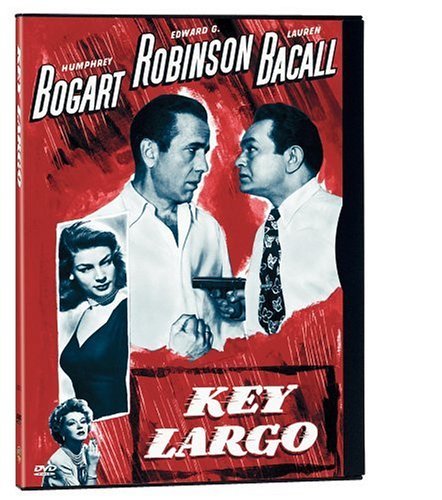
Friday Fundamentals in Film: Key Largo

If you like your good guys and bad guys in black and white with effective shades of gray then Key Largo is for you, and there’s a lot of star power to boot. The film was directed by John Huston and featured Humphrey Bogart, Lauren Bacall, Edward G. Robinson, Lionel Barrymore and Claire Trevor (who won an Oscar for Best Supporting Actress). There’s even a cameo by Jay Silverheels, TV’s Tonto from the Lone Ranger.

While the movie is described as a film noir thriller it’s not that noir-ish, and while there’s plenty of action it isn’t as suspenseful as you might expect. Still, it’s a very entertaining drama, well-acted and well-told and set against the backdrop of post-World War II America.

Bogie plays Frank McCloud, an idealistic but jaded war veteran who travels to Key Largo to visit the crippled father (Barrymore) and widow (Bacall) of George Temple, a friend who served under him in Italy. They are good, decent people and he tells them about George, saying, “You’d have been proud of him, like every man in his regiment. With good reason. It wasn’t just a matter of doing his duty. He was always looking for a way to do more. And finding it. George was a born hero, Mr. Temple. He couldn’t imagine his own death. Only dishonor.”

The Temple family owns a hotel, which also happens to have some unsavory guests in the person of Robinson, as gang-boss Johnny Rocco, and his assorted henchmen who are there to close a counterfeiting deal. Oh, and did I mention a hurricane is on the way?

As in Casablanca, Bogart plays a good guy who just wants to mind his own business and not get involved in any causes, but who ultimately can’t ignore his conscience. A subtext to the story that younger viewers are likely to miss is the postwar disillusionment Frank feels after sacrificing so much to defeat evil and then returning home to find things little changed, as ultimately manifested by Rocco. (Talk about great acting – one of the most powerful scenes is when Robinson is whispering to Lauren Bacall, even though she doesn’t speak and you can’t hear a word he is saying).

Thrown together in close quarters due to the storm, the Frank and Rocco naturally clash but when pressed to the sticking point Frank initially backs down to preserve his life, saying “One more or one less Johnny Rocco in the world isn’t worth dying for” even though it costs him the respect of the Temples (who apparently prefer dead heroes to survivors). It also costs him some of his own self-respect but he ultimately regains all when he realizes that “a fighter can’t walk away from a fight” and goes against doing the sensible because “your head says one thing but your whole life says another.”

Questions to answer:

  1. Was Frank’s bigger struggle with himself or with Rocco?
  2. Is “one more or one less Johnny Rocco in the world” worth dying for? How would you balance that equation?
  3. What is the one thing in the movie that Rocco fears, and why? Is this symbolic on a spiritual level?
  4. What do you think Nora meant when she said, “When you believe like George believed, maybe dying isn’t so important.”

Points to ponder: From the dialog in the story, why do you think Frank drifted between so many jobs after the war. What do you think his expectations were when the war was over, and how did he adapt to the reality?

Great quote:
“You’ve got to be lying. 800 people swept out to sea in a hurricane? Who would ever live here again if that really happened?”

About Fundamentals in Film: this series began as a class I taught to junior high and high school boys as a way to use the entertainment media to explore concepts of honor, honesty, duty and accountability. The movies were selected to demonstrate these themes and as a contrast to television that typically either portrays men as Homer Simpsons or professional wrestlers, with little in between those extremes. I wrote questions and points to ponder for each movie to stimulate discussion and to get the boys to articulate their thoughts and reactions to each movie. I offer this series here on this blog for the benefit of parents or others looking for a fun but challenging way to reinforce these concepts in their own families or groups. As the list of films grows each week, feel free to use these guides and to mix and match movies according to your interests or those of your group. I’m also always open to suggestions for other movies that can be added to the series.

Mall Diva, the early years: making a little girl cry

More snow during the morning rush hour today, but I’ve got my laptop and everything I need to work at home so I’m not going to bother with the commute. I’m working away on our new ad campaign (now I get the big bucks not for writing the ads but ripping apart someone else’s work) when it occurs to me that the Mall Diva is scheduled to work today at the mall — and hates to drive in snowstorms. I ask if she wants me to drive, like we attempted to do Monday, and I get one of those “Oh, Daddy, my hero” responses. When the time comes we set off, but now Tiger Lilly has realized this is a great opportunity to get that second set of ear piercings her mother said she could have when she was 12, so she came along.

This piercing was uneventful (at least from my perspective; Tiger Lilly might have her own take on it here later). A lot of what I’ve posted this week has come about because I’ve been reminded of things, but maybe that’s what starts to happen when you get to be my age. Today’s piercing reminded me of when the Diva’s big request for her 4th birthday was to get her ears pierced like all of her friends. I thought I’d previously scared her out of it, but she had rallied and her mom (who doesn’t have pierced ears) and I figured it was no big deal, so off we went.