Cleaning out the camera

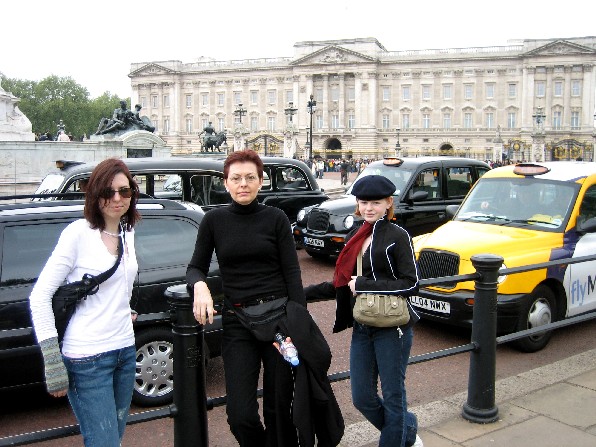
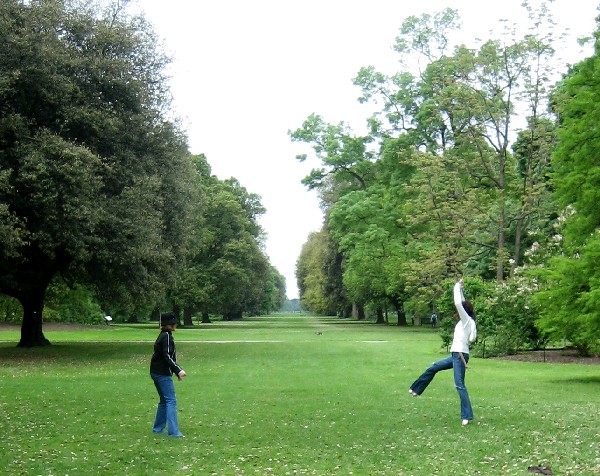
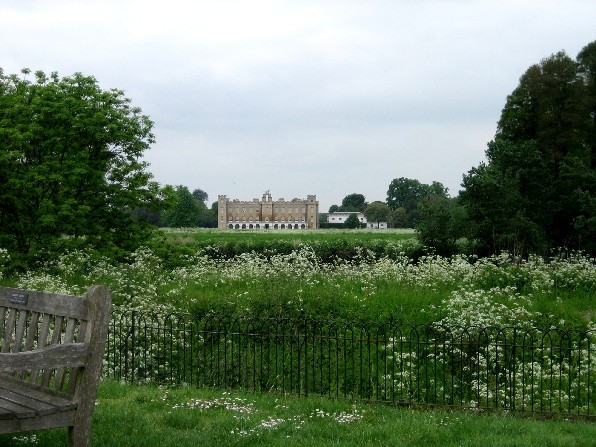
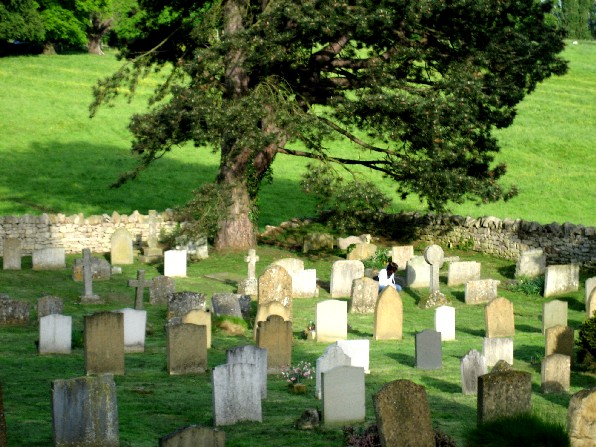
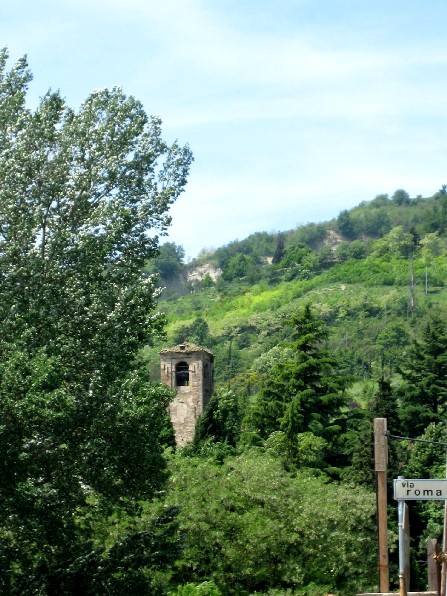
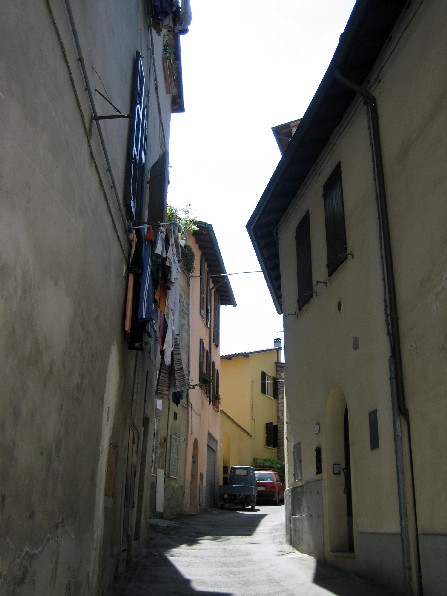
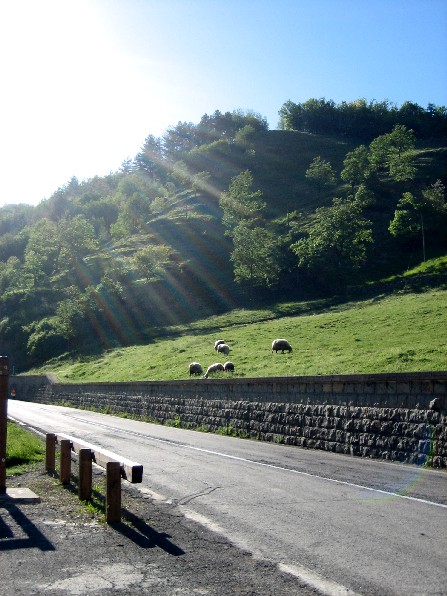
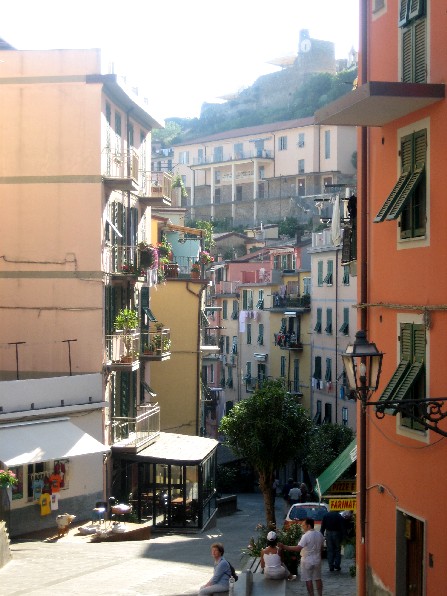
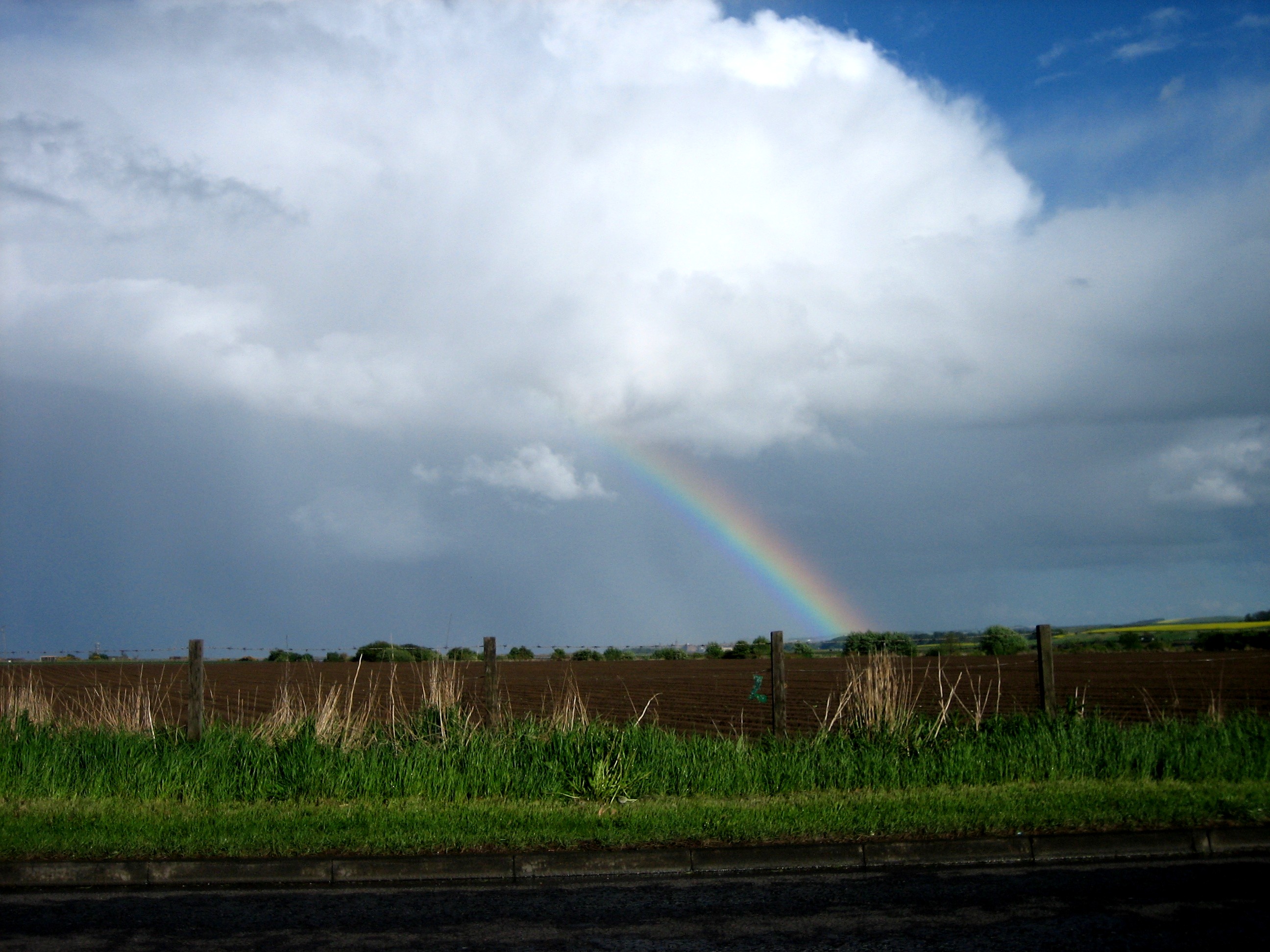
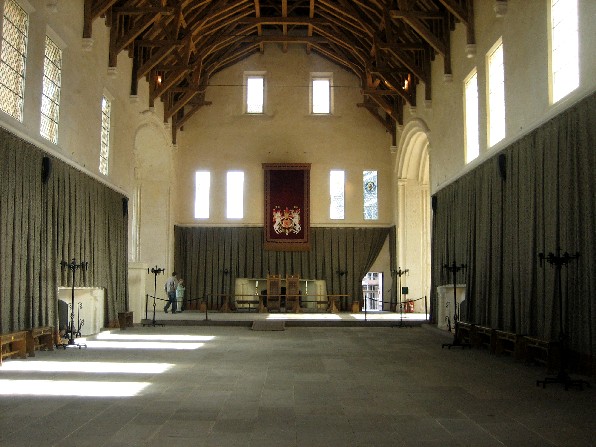
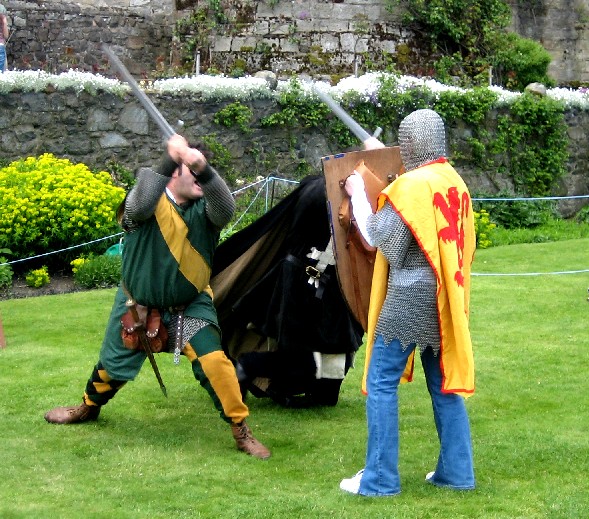
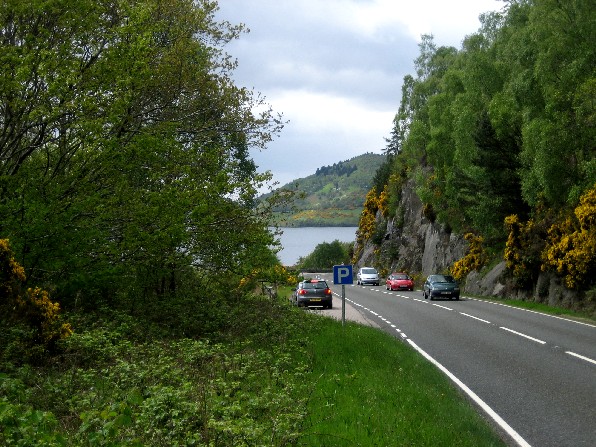
We’ve been back from our trip for almost a week and it’s time to finally close up the travelogue. Below are a collection of previously unpublished photos selected from the 899 that we took over the course of the trip. (Really, it was 899! If I’d realized that it was that number I would have taken one more just to round it off!)

The places you go, the people you meet

I wasn’t just gone to foreign lands the last three weeks; it felt like I was in a different world altogether. In those three weeks I read two newspapers, both of them English tabloids I picked up from chairs in airport waiting areas. Except for two nights in Ireland when the girls watched “X Factor” (an “American Idol” type of competition) we never turned a television on. Occasionally in pubs or restaurants I could see a big screen tv showing sports highlights that looked very ESPN-like, except that the highlights were soccer, rugby or cricket. When I was able to get internet access I spent most of the time uploading posts to my own blog and couldn’t browse around to find out what people were talking about.

And yet somehow the world kept turning, despite my ignorance — and inability to comment. Despite that I did learn that the world can be a pretty friendly place. Aside from our professionally friendly (and always helpful) hosts at the various B&Bs we stayed at, I was regularly approached by others throughout the trip who struck up conversations, including the fellow in Ireland I mentioned earlier who had once lived just a few blocks from my house in South St. Paul.

During our last couple of days on the farm in Tuscany I met Leonhard who arrived with a group of Swedes for a week of sunshine. I met him when he and his wife were touring the grounds and came across me in the laundry cave. In a short time we had exchanged the details of our respective trips, other trips we’d been on and points of interest in the area. Leonhard also seemed very happy to have gotten a rather severe looking sunburn on his chest and face in just one afternoon, and found my trips back and forth the washing machine amusing. At one point he asked me why I didn’t just throw the dirty clothes away and buy new ones. I told him that in America that’s what we always do but when I travel I like to try and live like the common people we visit. He had a large laugh over that one.

Laundry also brought me into contact with some other nice people. It was in Carlisle, near the Scottish border where we were staying at a B&B that was more like a hotel. We had driven all day from the Cotswalds in stop and go traffic to get there and I still needed to find a laundromat or else fashion kilts from bath towels for everyone the next day. The lodge graciously allowed me to use their washing machine and dryer, which was in a little room next to its lounge. It had been a long, frustrating day and I still had a few hours of laundry to do, but this situation was significantly improved by discovering that the lounge had a very fine collection of single malt whiskeys, including a fine Isle of Jura that was more than old enough to be out that late.

After I got the first load of clothes started I treated myself to a wee dram of this golden elixir with just two small icecubes, but first I positioned myself on a comfy couch, plugged my laptop in and got it started, and then, drawing out the suspense, took that first, slow sip, letting it amble warmly over my tongue. I must have even closed my eyes because I was startled when a voice near me said, “I bet you rather enjoyed that.”

Looking up I saw a couple named David and Jan beaming at me from their own comfy chairs. I admitted that, yes indeed, I had enjoyed that very much. They were from Wales and David was on his way to meet with a group of friends to play golf around Scotland, including a tee-time at St. Andrews, but at the New Course (which was just laid down in the 1800s). “Oh yes,” I said, “The New Course. I hear it will be very nice when it finally grows in.”

It was fun to talk to another golf enthusiast, though I told them I didn’t know much about Wales outside of some Max Boyce “Live at Treorchy” rugby songs and the movie “Zulu.” Turns out they also have that album and like that movie, though David can’t abide the song “Men of Harlech” that the Welshmen sing during the movie. Still, it was appropriate for us to caterwaul our way through a short chorus of Boyce’s “The Scottish Trip” (since that’s what we all were on). This was remarkably easy for me to do because the Jura was bestowing magical properties and because David may well be the only Welshman who cannot sing. A couple of days later my family and I bumped into Jan while touring Stirling castle. We were surprised to see each other again, and she commented on it being a small world. “Well, it certainly is a small island, at any rate!” I replied.

The whole family also enjoyed a pleasant evening in the Cotswalds when we had dinner at the Lygon Arms in the town of Chipping Campden. We sat down to eat at about the same time as a family next to us which consisted of husband, wife, daughter and two in-laws. A little ways into our meal the husband struck up a conversation and our families discussed our trips. They were visiting the Cotswalds on their way to a vacation in Portugal, and I said we were on our way to Carlisle and then to Scotland. It turned out that his family was all from the Carlisle area and they gave us some good tips on where to stay. During dessert he asked if he could buy us a drink and we said we’d enjoy a coffee with our dessert, which he happily took care of. When I asked the waitress later for our check she said our entire bill had already been settled by the gentleman at the next table.

We were very surprised and appreciative, but he shrugged it off saying, “It cost a lot less to feed you than my lot, believe me.” I asked if I could know his name and he said it was Edward Stobart. As we were leaving his father-in-law said we’d see that name a lot the next day, especially as we got near Carlisle. “About every third lorrie you see on the motorway will say ‘Eddie Stobart’ on it,” he said. It turns out that Eddie Stobart, LTD is not only the U.K.’s largest independent logistics company, it has its own fan club of people who watch for the distinctively liveried trucks, with each cab named bearing a woman’s name. To us, however, they were just a down-to-earth family that we enjoyed talking to about kids, movies, scenery and traffic. (And I ordered a model of one their trucks from the Stobart web-site as a souvenir.)

I also greatly enjoyed talking to our host in Italy, Francesco; the McDougals – a lovely older couple in Inverness who were right out of Brigadoon; Christopher and Vreni at Bran Mill Cottage B&B in the Cotswalds; and of course John and Maire Daly in Ireland who I mentioned in an earlier post.

All in all I’d have to say that even though I didn’t have much access to the media while we traveled, I was far from being disconnected.

June 6th

I’ve felt like this before. The nausea,
simultaneously sweating and shivering,
knowing that something was about to happen
and it wouldn’t be good.
Then it was being crammed into the landing craft,
Pressing toward Omaha Beach,
held in place by the shoulders of the men on either side of me,
eyes fixed on the door at the front,
with death on the other side as the bullets hissed.
Now it’s more than sixty years later
and the tubes and wires
hold me in place as the machines hiss
as I stare at the door with death on the other side.
Maybe this time, too, I’ll be lucky.

Then we advanced like a wave, and death took us
by the handfuls;
Bombs, machine guns, artillery shells leaving
sudden gaps in the line,
friendships and debts disappearing in an instant,
but we still advanced from hedge to hill, from farm to city.
Storming a farm house we found
the German kid with a couple of bullets
(maybe mine)
in him, clutching a religious medallion and
praying “Mein Gott, mein Gott”
as he bled out.
My God.
My God, too.
I knelt and his lips moved as he looked at me,
I put my hand on the side of his face,
“God, have mercy on him,” I prayed as his
face became peaceful and the light left with his blood.
“God, have mercy on us all.”

At reunions we’d regroup and note
the new gaps in the line;
death now a sniper as we fall one by one
and just as inevitably.
Does He see our faces in the scope
as He lines up the head shot,
or only the meat as he selects
heart, lungs, marrow?
Then we advanced because we had to,
We had to win
We had to make our losses mean something.
We thought we had won, at the end,
but it was only the war and not the battle
and the lives were just a down-payment
on peace and breathing room
until the enemy returns
with installments paid in different ways
in the days and nights to come.
Sometimes in later years
when I felt the moistness of my wife
I would suddenly think of Steinie,
of pushing his guts back inside him
after he was burst by the 88.
Those were the nights, then,
when I would sit up at the kitchen table, smoking
until you kids came in for breakfast,
keeping watch, remembering the faces,
wondering how many others might also be sitting up
that night, remembering the same faces.
I don’t wonder so much anymore.

Meanwhile, the fat sales director,
who sat out the war In England
in the Quartermaster corps, would say,
“Boys, we’ve got to take that hill” and
we would take that hill, fill that quota,
and make another payment on the Dream
because we had seen Evil and had our fill
and thought it was finished and that
the world had been reborn shiny and new.
Surely it had to have been,
given the cost;
surely evil had to have been driven away,
and we came back to build a new world
for you our children,
a world where you would never have to
face what we faced;
see what we saw,
do what we had done.
We were naive, of course,
but don’t blame us
for wanting it to be so.

Did we do wrong, my children?
Thinking no one would dare open that door again,
did we neglect to prepare you,
to give you valuable perspective?
You´ve seen the pictures,
And heard the words,
but you can´t know the smell
or the taste,
of walking into that concentration camp,
so your Hitlers are effigies and
Nazis are bogeymen,
mere cursing but not a curse.
I´m sorry, I´m sorry, I´m sorry.
There’s much I would have you know
things I should have said and
lessons you’ll have to learn on your own.

I don’t know why I’ve lived so long
when so many died around me,
unless it’s because something of their
unused futures was somehow transferred to me
in the spray of their blood.
I’ve tried to use it well.
May you do the same.

— John Stewart

For Cathy (and not for the squeamish)

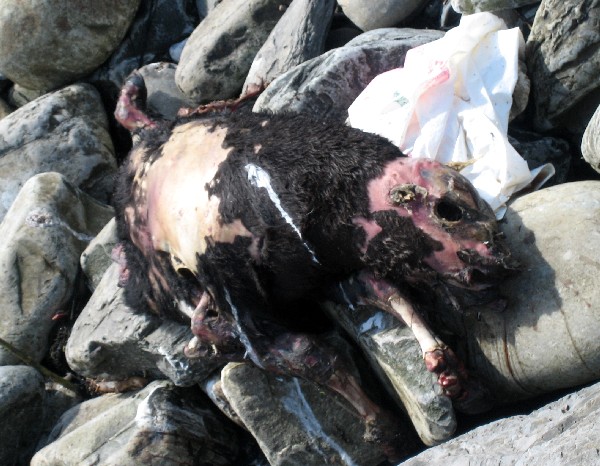
Cathy in the Wright is always on the lookout for dead things, and likes to post pictures of these carcasses when she finds them. Here, just for her and anyone else with the stomach for it is a photo of something we found washed up on the rocks on the beach in Quilty, Ireland.

It smelled worse than Marmite.

Yes, that’s right, we went to the beach! It was hot!

Peace out!

A good day for economists

An interesting juxtaposition from today’s The Writer’s Almanac:

We don’t know when Adam Smith (books by this author), was born, but it was on this day in 1723 that Smith, the economist who popularized the idea of free trade, was baptized in Kirkcaldy, Scotland. His first important book was The Theory of Moral Sentiments (1759), in which he argued that all people are selfish, but that the combined selfishness of many people benefits everyone. He wrote, “[We are] led by an invisible hand … without knowing it, without intending it, [to] advance the interest of the society.” He developed this idea in the book for which he is best remembered, Wealth of Nations (1776). That book established many of the most important principles for economists for the next two hundred years.

Adam Smith wrote, “It is not from the benevolence of the butcher, the brewer, or the baker, that we expect our dinner, but from their regard to their own interest.”

Today is also the birthday of the economist John Maynard Keynes, (books by this author), born in Cambridge, England (1883). He’s best known for his book The General Theory of Employment, Interest and Money, published during the Great Depression in 1935. He argued that governments can correct severe depressions by spending lots of money, even if it means running a deficit, to put people back to work. Keynes greatly influenced Franklin D. Roosevelt’s New Deal policies, and his ideas have been used to justify budget deficits ever since.

It’s well worth following the links to read more about these men and their work, especially the section in the Keynes link that describes his relationship with Friedrich von Hayek and their commentary on the book, “The Road to Serfdom”.

Homeward bound

Onboard Northwest flight 43 en route to Minneapolis from London-Gatwick. We’ve got 7 hours and 58 minutes of flying time; substantially more than the battery life on my laptop, but I’ll offer some encapsulated thoughts and observations on our trip.

Euro – peein’

The second-most common phrase I’ve heard from my family in the last three weeks is, “Gelato, Poppi!” The most common phrase, however, is “I have to pee!” Three women. Three bladders. And a dedication to staying properly hydrated.

After this trip I have an even greater understanding of the differences between men and women. I am well aware that men have to pee, too, and that our standards for what is an acceptable place for exercising this prerogative are different as well. What I’ve come to realize is that for myself, the need for relief is measured by something that works like a fuel gauge on a car. At any given time I can assess the “level” and how long it will be before I’m going to need to stop. I can also compare that projection with the distance remaining in the trip, or to the next stop.

Women apparently don’t have this gauge. For them it’s more like a “check engine” light; it’s either on or it’s off, and, like the light, when it comes on something has to be done – now! And yes, it is too much to hope that any random grouping of three bladders might possibly get in sync with one another.

The most important meal of the day

Most of the places we’ve stayed in the last three weeks have been Bed & Breakfasts. As a result, we developed some strong feelings about breakfast as the trip progressed.

The first place we stayed in London offered cold cereal, juice, yogurt, toast, cheese, tea or coffee and a selection of cold lunchmeats. After three days of that we went to Italy where we were on our own for breakfast for the first few days near Dicomano in Tuscany. No problem, we’d just head into the little village to get our morning dose of cappuccino and something to eat. In Italy, however, breakfast is typically small and usually consists of just croissants (often called brioche) or small sweet rolls. This is a nice change, but by the end of the week we were really craving something more substantial; we wanted to sink our teeth into some serious protein and starch.

This desire was soon met when we returned to England and were introduced to the “Full English breakfast”: eggs, back bacon, sausage, beans, mushrooms, half a fried tomato, toast and – yum – Marmite. (I can’t imagine anyone liking Marmite, but somebody must because they seem to make an awful lot of it, and awful is the right word.)

This was great for the first week or so. Then we discovered that the “Full Scottish Breakfast” and “Full Irish Breakfast” offered at our later stays were very, very much like the “Full English breakfast.” It was enough to make you logy just thinking about it. At one place in Bo’ Ness, Scotland our hostess made the mistake of asking us the night before what we’d like for breakfast. Immediately the girls piped up:

“Pancakes!”
“French Toast!”
“Anything but bacon and eggs!”

The poor woman had no idea what French Toast was, and seemed dubious at the recipe that was offered, but thought she could handle pancakes. The next morning that was what we got, and they were a refreshing change, especially served with “Lyle’s Golden Syrup.” I don’t know just what this syrup comes from, but it’s not maple trees. Still it was sweet, sticky and tasted good, if a bit fruity.

The breakfasts also usually came with a selection of cold cereals, which is a pretty common way for us to start our day at home. In Ireland, however, my wife and the Mall Diva discovered a new cereal: Wheatabix. They love this and don’t think they’ve ever seen it in the states. They both surreptiously slipped sealed individual packages of these dense, palm-sized wheat bricks into their bags this morning at our last “Full English Breakfast” before departing.

Tomorrow: bagels!