A Life After Death

On June 17, 2003, Shirley Shepherd did not show up for her job at a St. Paul storage facility. The energetic 79-year-old grandmother and great-grandmother also didn’t pay her daily visit to church, or make one of her regular calls on a good friend in a nursing home, and she wasn’t at her house. Her car, which had previously been stolen and recovered, was also missing.

Television, radio and newspapers broadcast details of the search as her family and friends agonized. Two days later her body, identifiable initially by her jewelry, was found beside a walking path in Woodbury. The police’s attention was focused on the young woman, Tekela Richardson, who had previously stolen Shirley’s car and who was also a customer of the storage center. She offered many versions of her story pointing to other people but ultimately confessed to the killing and was sentenced to more than 20 years in prison. With that the story sank out of public view.

The story, of course, didn’t end for Shirley’s family. Her two sons and two daughters and their families were left with anger, hurt and a lot of questions. In the midst of it, however, was unexpected peace and comfort from an unlikely source, the eldest brother, Greg Shepherd.

Fit and solid even into his 50s, Greg still looks and moves like the athlete he was once known for being. He was also known by his family and co-workers, however, for his temper and outbursts. Yet there he was, composed and talking to the media, and a steadying resource for his family. What was happening?

“My wife Nancy and our son had gone to this church near us several years ago and really liked it and felt they were getting something out of it,” Greg says. “I couldn’t believe it when they told me the services could last as much as two hours. I said, ‘I’ll never go there.’ That wasn’t what I was used to. I liked it where you went in, listened to the sermon for 20 minutes and then you’re out and go to lunch.”

About four years ago, however, he was persuaded to pay a couple of visits, and was amazed by what he saw in the group and in the pastor, Rev. Dr. Tom Jestus. “There just seemed to be a light in his life and the people looked like they were happy to be there,” Greg says. “Pastor Tom didn’t just read from the Bible but explained the scriptures that I never understood before, and did so in a way that I could enjoy and even take away things I could use in my life.” Greg and his wife became regular attenders, connecting with many of the other members at the Miracle Centre in South St. Paul.

Gradually he began to see changes in the way he reacted to things and to other people. Then his mother was killed and he saw just how much his heart had changed.

“Yes, I was angry and I probably felt some hatred at first,” he says. “But we had people praying for us, stopping by, leaving messages. Pastor Tom was there everyday, reminding me to look at God’s plan, not my plan. He helped me to see that it didn’t do any good to scream and yell and be angry at the person who had done this, that I would only hurt myself, and that’s not God’s desire for me.

“If God and Tom hadn’t already been working on me, and then being with me, I would have been a lot different going through this, believe me. There definitely would have been outbursts. At first I wanted to know why this happened in the way it did, but I began to better understand what God’s son went through, and what he endured so that something good could happen for us, and good things were going to happen now because of what my mom went through. I’m at peace and I know my mom is as well.”

One of the good things that started to happen almost right away was that friends and family grieving Shirley or dealing with other crises in their lives began to meet with Greg and Tom at Greg’s house on Tuesday evenings to talk and pray and find out that the Bible isn’t just platitudes and “thou shall nots”. Many in the group don’t attend church otherwise, or aren’t “religious” but are finding a benefit that has kept the group going for the last two years.

“We’ve got nine or 10 people coming regularly to meet for an hour. People dealing with family problems, divorce, kid problems, whatever, and we get it out in the open and ask questions and find answers in the Bible,” Greg says. “We find good, practical things about what we can do and what we should do, and it helps us to look at the big picture by looking at Jesus’ life and all the things he did and the effect he has had. It’s relaxing, and brings us comfort and peace of mind.”

Another change Greg has noticed is that he is more open and comfortable with people than before. “Until this time I wouldn’t have been able to sit around and talk about my faith or what happened to my mom, but now I can talk to anybody,” he says. “A lot of times people don’t know what to say when someone is going through a bad situation, but now when I go to wakes or funerals or other things I have a better feel for what people are going through.

“My marriage has also gotten better. We’ve had a good marriage, married 33 years, but this has made it stronger. We can talk about God with each other now and with our kids, and they can see a difference in us. People who knew me before can’t believe that I don’t want to get ahold of that woman and rip her up, but what good would that do, and how would that reflect on God?

“I don’t hate her. I hope she gets her life turned around in prison to where she knows she can ask God to forgive her, but other than that I don’t think about her very much,” he says. “Sometimes it seems like there’s a lot of attention focused on people who commit crimes, like the big article the St. Paul paper did the other day about the guy who had raped two women. What good does that do? Why not focus on the good things the victims did? My mom visited the nursing home regularly, took people who were down and out into her home, and even tried to be a friend to Tekela and people should know about those things and be encouraged that there are people like her in the world.”

Rather than being bitter, Greg has let his mother’s life be an inspiration. “I’ve realized that life is short and I want to give back as much as I can,” he says. “I’m not going to waste time hating anyone. Once you let the hatred get in then the Devil’s got you. I try to keep my mind open to God and let him do what he needs to do through me.

“What does anyone want out of life? Meaning – a life with meaning. That’s what I have.”

Deep Throat and Being in the Belly of the Beast A’borning

Ever since W. Mark Felt, Jr. stepped out of the shadows of Hal Holbrook and a parking garage to reveal himself as Deep Throat, my thoughts have dwelled on that time nearly 30 years ago when I was in the first class of students to enter journalism school after the movie “All the President’s Men” came out. I’ve thought not just about those days, but the effects of Mr. Felt on journalism today and on my own life.

My introduction to journalism actually came in the fall of 1971 when I was in the 8th grade and started to write for the school newspaper. By the spring of ’72 I was co-editor and thought my life’s course was set: I was going to go journalism school and write for a living. Also right about that time we first started hearing about something called Watergate, but the fall of ’72 brought President Nixon’s re-election. This was followed by his resignation in ’74, and the movie in 1976.

In the fall of ’77 I started my journalism classes at one of the big three journalism schools in the country, along with an impassioned lot committed to being the next Woodward and Bernstein’s. Those were heady days back then as we sat in our News Writing 101 class (really, that’s what it was called) and learned interview techniques, story construction, to question everything and to always get at least two sources before running anything. We were given 30 minute deadlines and pounded out our assignments on old manual Underwoods and Royals with ribbons left over from the Crimean War. We also sat in our History of Journalism class as Professor Taft, who looked old enough to have worked as Gutenberg’s copy boy, tried to drum the history and traditions of the craft into our heads. He’d talk about all of us “Woodsteins” sitting out there wanting to break the story of the century without learning the lessons of the past century.

Part of our training involved working on the daily city newspaper the J-school produced — world and national news, metro, sports, lifestyle, including advertising — with a daily circulation of some 35,000. The reporters were all students and our professors and editors were often one and the same. One editor in particular taught a News class and looked like Central Casting’s idea of a gunfighter: ramrod straight, steely eyes, a withering glare and a temperment itching to gun down the careless and undedicated. He absolutely hated, and would not tolerate, an anonymous or aliased source. You dared not bring one into a story in his newsroom, and he would rail against it from his lectern as a technique that invited abuse from a lazy journalist and manipulation by a source who could keep his name and agenda hidden.

Most of us had read our Capote, and were reading Hunter S. Thompson, and itching to tell stories through the eyes of the principals – especially the kinds of stories where the principals might not want to be specifically identified, and this restriction seemed unnecessarily harsh. When I, while working under another editor, wrote a magazine feature about a Vietnam vet turned mercenary (who needed to remain anonymous for legal reasons), I had to bring both the merc and some of his documentation to my editor in order for the article to run.

Certainly everything we were warned about manifested just a few years later, in 1980, when Janet Cooke, someone our age, won and then was stripped of a Pulitzer when it turned out she had invented the 8-year-old heroin addict, “Jimmy,” who was the center of her series of articles for the Washington Post. In the process she became godmother to Stephen Glass and Jayson Blair. Until Felt came forward there were those who wondered if Deep Throat really existed or was as fanciful as Cooke’s Jimmy, as Glass’s computer hackers or as Blair’s expense reports.

What has largely been forgotten about Watergate is that Deep Throat’s main usefulness to Woodward and Bernstein was in pointing them in certain directions and confirming information they discovered as a result. The information he provided was born out by events. Woodward and Bernstein may not have been lazy, but as we’ve learned lately, Mr. Felt was not as forthcoming with his own motives as he was with other information, and they didn’t pursue this part of the story and deprived the story and the public of that context. Ultimately it may have made no difference in the outcome. Further, their efforts to find multiple confirmations is a far cry from today where not correcting a statement is accepted as a confirmation.

Certainly combative relationships between journalists and governments has a long history predating Watergate, and even Tammany Hall. One side has and will always try to keep some things hidden, and the other will always try to find ways to bring these to light. Something about the Nixon and Watergate era, however, appears to have made this battle personal in the way it is prosecuted, but that may simply be my perception from living in these days. Romantically, perhaps, I think of the time before Watergate, Vietnam and Deep Throat as more of a game, although played for high stakes. Since then it has become a war, and has often been said, truth is the first casualty.

Carl Bernstein himself may have described it best when he said, “The lowest form of popular culture — lack of information, misinformation, misinformation and a contempt for the truth or the reality of most people’s lives — has overrun real journalism. Today, ordinary Americans are being stuffed with garbage.”

Who’s Wounding the Civilians?

The StarTribune ran this Washington Post story in the upper right hand corner of its front page this morning, proclaiming “Wounded Civilians in Iraq Get Little Help.”

My first thought was the article and its placement are another attempt to suggest “quagmire” or paint a hopeless picture. My own filtering system suggests that such a strategy of subtle psychological warfare may be “false but still plausible” but I’m not going to fisk this article. Instead, the image that immediately came to my mind when I read the headline was this photo that Michelle Malkin featured last month (click to enlarge):

There was “little help” for this Iraqi girl following a terrorist bombing.

The photo was by freelance journalist Michael Yon, embedded with a brigade of Marines in Mosul at the time. Follow the link to read his account of what happened and a postscript on the effects of the photo.

Whatever its motives, the WaPo article couldn’t help but point out that over the past 18 months the civilians have suffered greatly at the hands of the terrorists (the article called them “insurgents”). It’s bloody, not subtle, but it is still psychological warfare in the name of the Fear of Man, not of God. At its heart it is really all about the all-too-human desire for power. And, as the photo shows, it has an all-too-human cost.

To that extent the war may be “unwinnable”, be it Northern Ireland or the Sunni Triangle. How much better, however, to put the focus on those trying to change things for the better. Run the same WaPo article but include the picture above and the reader comes away with a different perspective.

Finally, if for some strange reason your picture of Iraq is of a sinking sand quagmire, it’s worth going back to Yon’s blog to read his latest accounts and see the pictures he’s taken about what things are like.

No, Torii, Don’t Swi – …. Nevermind!

First, let me say I love having Torii Hunter on the Twins and I’m happy they signed him to a big contract. I love watching him go over the wall to bring back home runs or make diving catches to prevent doubles, and noooobody tries to take an extra base on him. If you put Andruw Jones in left field and Hunter in right, I could play centerfield – riding a Segway. We’d never let a ball drop.

My problem is that for all his years of experience the man has the patience of a mayfly at the plate. In recent years there were two articles we could always count on seeing every season in a Minnesota sports page: one talking about Randy Moss’s new maturity and leadership and the second about Hunter’s new commitment to plate discipline. The latter article usually included something about what a positive influence Shannon Stewart is, but it appears the effect works only if they both bat in the same inning.

Normally I wouldn’t create a post just to restate the obvious, but today seems like a good time to do so after last night’s 6-2 Twins win, highlighted by a heaping helping of everything that Torii does that makes him Torii – including the following from the Strib’s account:

The Twins trailed 2-0 with the bases loaded and one out in the third inning when Hunter came up. Lefthander Cliff Lee tried to get ahead with a curve ball, expecting Hunter to be sitting on a fastball.

Truth is, Lee was right. But the pitch hung a little, and…

“My hands said, ‘Yes,'” Hunter said. “Most people don’t swing at a first-pitch curve ball. I don’t know why I did. … I didn’t think I was going to swing at it. It was just a reaction.”

Let’s make this clear: NOBODY swings at a first-pitch curve ball with bases loaded. I suppose there’s just something about seeing a ball in motion that sends Hunter over walls after homers … and swinging at balls almost as high.

Oh well, like summer in Minnesota, you’ve got to love him despite the minor annoyances. And I’m not like some friends of mine who used to insist that Tom Brunansky never hit a homerun that did the Twins any good. In fact, if you go over to Craig Westover’s blog he has a method for calculating the average number of at-bats a player needs to produce a run (he calls it the ABR). You’ll have to read his explanation for how this works, but the key is that the lower the number is, the better. Using Craig’s tool you see that Kirby Puckett had a career ABR of 3.46. Torii Hunter’s career ABR is 3.47 – exactly the same as the career ABRs of Tony Oliva and Hall of Famer Roberto Clemente.

COOTIES!
While in the Strib’s sports section I read Sid Hartman’s column where he revealed the following scoop:

Williams Arena was completed in 1928, and the training room has had some great Gophers basketball players spend time there.

But now the women’s basketball team is going to take over the men’s training room as its locker room. The men’s training room will be wrecked and a new one will be built down the hall past the visiting men’s locker room. So when the men get taped before a game, they will have to walk a good long distance past the visiting men’s locker room. The training room will be used by the women’s and men’s teams…

… So now, in a three-year period, the men have lost exclusive practice time at Williams Arena, exclusive scheduling of games and now a training room with great historic tradition that should have been preserved.

I’m predicting several late fourth quarter folds by the men’s team this winter, brought on by the lads being tired out from the extra energy expended getting taped. And how can you measure the effect of all the tradition in that training room? Did you know that when you were in there, if you were lucky, you might get to see the very razor they used to use to shave Randy Breuer’s back?

At least the mens’ teams will never have to worry about having to share Sid’s exclusive attention with the women.

Remembrance Day

The Missouri foothills have been both the home and final resting place for my family going back seven generations. Along about the 1850s Thomas Ryerson was the first in the line to settle in the Oak Hill community to try and pull a living out of hardscrabble ground. He married a Souders girl, and others who followed him provided the family names woven into our history. Not that you’d be so inclined, but you’d be hard pressed to find a map with Oak Hill on it as the town has been all but defunct for at least the last couple of these generations.

The old bank and few other buildings still stand, but it takes a discerning eye and even a reliable guide to get you back to what’s left of the town, and the few squatters there probably like it that way. A visit there is best assayed in daylight. It’s still largely a rural area and the cemeteries typically don’t bear fancy, aspirational names suggesting peace and eternity. Many are named after the original farmstead where the cemetery is located and some may be named for a community now as dead as those who are buried in its namesake. Significant numbers of my ancestors rest in the Oak Hill cemetery or at the Mounts farm.

My maternal grandfather used to take me out to Oak Hill when I was a boy to walk among the stones and tell me stories about the people he knew there. Most of these I’ve forgotten, but I’ve always remembered the headstone of a girl named Bonnie because she had been about my age (at the time of my first visit) when she died in the early 40s in an automobile accident. Her headstone featured a black and white photo of a blonde girl. Eight years ago my grandfather finally caught up with his friends and family and we brought him back to Oak Hill at the head of a procession that was so long that at one point I looked back and could see the road running across three hilltops and every car in sight was part of the cortege.

Memorial Day weekend and I’m back in the family stomping grounds so I offer to take my grandmother, who will be 89 this June, out to Mounts to visit her mother’s grave and to Oak Hill. Like my grandfather before me I also bring along a youngster, my 11-year-old daughter.

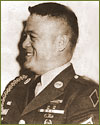
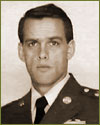
Memorial Day: Congressional Medal of Honor Winners Yabes and Gordon


MAXIMO YABES

Born: January 29, 1925

War: Vietnam

Rank: First Sergeant, U.S. Army

Location of Action: Near Phu Hoa Dong

Date of Action: February 26, 1967


Official Medal of Honor Citation: For conspicuous gallantry and intrepidity at the risk of his life above and beyond the call of duty. 1st Sgt. Yabes distinguished himself with Company A, which was providing security for a land clearing operation.


Early in the morning the company suddenly came under intense automatic weapons and mortar fire followed by a battalion sized assault from 3 sides. Penetrating the defensive perimeter the enemy advanced on the company command post bunker. The command post received increasingly heavy fire and was in danger of being overwhelmed.


When several enemy grenades landed within the command post, 1st Sgt. Yabes shouted a warning and used his body as a shield to protect others in the bunker. Although painfully wounded by numerous grenade fragments, and despite the vicious enemy fire on the bunker, he remained there to provide covering fire and enable the others in the command group to relocate. When the command group had reached a new position, 1st Sgt. Yabes moved through a withering hail of enemy fire to another bunker 50 meters away. There he secured a grenade launcher from a fallen comrade and fired point blank into the attacking Viet Cong stopping further penetration of the perimeter.


Noting 2 wounded men helpless in the fire swept area, he moved them to a safer position where they could be given medical treatment. He resumed his accurate and effective fire killing several enemy soldiers and forcing others to withdraw from the vicinity of the command post. As the battle continued, he observed an enemy machinegun within the perimeter which threatened the whole position. On his own, he dashed across the exposed area, assaulted the machinegun, killed the crew, destroyed the weapon, and fell mortally wounded.


1st Sgt. Yabes’ valiant and selfless actions saved the lives of many of his fellow soldiers and inspired his comrades to effectively repel the enemy assault. His indomitable fighting spirit, extraordinary courage and intrepidity at the cost of his life are in the highest military traditions and reflect great credit upon himself and the Armed Forces of his country.


GARY I. GORDON

Born: August 30, 1960

Military Action: Somalia

Rank: Master Sergeant, U.S. Army

Location of Action: Mogadishu, Somalia

Date of Action: October 3, 1993


Official Medal of Honor Citation: Master Sergeant Gordon, United States Army, distinguished himself by actions above and beyond the call of duty on 3 October 1993, while serving as Sniper Team Leader, United States Army Special Operations Command with Task Force Ranger in Mogadishu, Somalia.


Master Sergeant Gordon’s sniper team provided precision fires from the lead helicopter during an assault and at two helicopter crash sites, while subjected to intense automatic weapons and rocket propelled grenade fires. When Master Sergeant Gordon learned that ground forces were not immediately available to secure the second crash site, he and another sniper unhesitatingly volunteered to be inserted to protect the four critically wounded personnel, despite being well aware of the growing number of enemy personnel closing in on the site.


After his third request to be inserted, Master Sergeant Gordon received permission to perform his volunteer mission. When debris and enemy ground fires at the site caused them to abort the first attempt, Master Sergeant Gordon was inserted one hundred meters south of the crash site. Equipped with only his sniper rifle and a pistol, Master Sergeant Gordon and his fellow sniper, while under intense small arms fire from the enemy, fought their way through a dense maze of shanties and shacks to reach the critically injured crew members.


Master Sergeant Gordon immediately pulled the pilot and the other crew members from the aircraft, establishing a perimeter which placed him and his fellow sniper in the most vulnerable position. Master Sergeant Gordon used his long range rifle and side arm to kill an undetermined number of attackers until he depleted his ammunition. Master Sergeant Gordon then went back to the wreckage, recovering some of the crew’s weapons and ammunition.


Despite the fact that he was critically low on ammunition, he provided some of it to the dazed pilot and then radioed for help. Master Sergeant Gordon continued to travel the perimeter, protecting the downed crew. After his team member was fatally wounded and his own rifle ammunition exhausted, Master Sergeant Gordon returned to the wreckage, recovering a rifle with the last five rounds of ammunition and gave it to the pilot with the words, “good luck.” Then, armed only with his pistol, Master Sergeant Gordon continued to fight until he was fatally wounded.


His actions saved the pilot’s life. Master Sergeant Gordon’s extraordinary heroism and devotion to duty were in keeping with the highest standards of military service and reflect great credit upon him, his unit and the United States Army.


These and other Congressional Medal of Honor citations may be found at Military Connections.

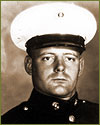
Memorial Day: Congressional Medal of Honor Winner Jedh Colby Barker


JEDH COLBY BARKER

Born: June 20, 1945

War: Vietnam

Rank: Lance Corporal, U.S. Marine Corps

Location of Action: Near Con Thein

Date of Action: September 21, 1967


Official Medal of Honor Citation: For conspicuous gallantry and intrepidity at the risk of his life above and beyond the call of duty while serving as a machine gunner with Company F.


During a reconnaissance operation L/Cpl. Barker’s squad was suddenly hit by enemy sniper fire. The squad immediately deployed to a combat formation and advanced to a strongly fortified enemy position, when it was again struck by small arms and automatic weapons fire, sustaining numerous casualties. Although wounded by the initial burst of fire, L/Cpl. Barker boldly remained in the open, delivering a devastating volume of accurate fire on the numerically superior force.


The enemy was intent upon annihilating the small marine force and, realizing that L/Cpl. Barker was a threat to their position, directed the preponderance of their fire on his position. He was again wounded, this time in the right hand, which prevented him from operating his vitally needed machine gun.


Suddenly and without warning, an enemy grenade landed in the midst of the few surviving marines. Unhesitatingly and with complete disregard for his personal safety, L/Cpl. Barker threw himself upon the deadly grenade, absorbing with his body the full and tremendous force of the explosion. In a final act of bravery, he crawled to the side of a wounded comrade and administered first aid before succumbing to his grievous wounds.


His bold initiative, intrepid fighting spirit and unwavering devotion to duty in the face of almost certain death undoubtedly saved his comrades from further injury or possible death and reflected great credit upon himself, the Marine Corps, and the U.S. Naval Service. He gallantly gave his life for his country.


This and other Congressional Medal of Honor citations may be found at Military Connections.

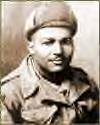
Memorial Day: Congressional Medal of Honor Winner Cornelius H. Charlton


CORNELIUS H. CHARLTON
Born: 1929
War: Korea
Rank: Sergeant, U.S. Army
Location of Action: Near Chipo-ri
Date of Action: June 2, 1951


Official Medal of Honor Citation: Sergeant Cornelius H. Charlton, Infantry, United States Army, a member of Company C 24th Infantry Regiment, 25th Infantry Division, distinguished himself by conspicuous gallantry and intrepidity above and beyond the call of duty in action against the enemy on 2 June 1951, near Chipo-ri, Korea.

His platoon was attacking heavily defended hostile positions on commanding ground when the leader was wounded and evacuated. Sergeant Charlton assumed command, rallied the men, and spearheaded the assault against the hill. Personally eliminating two hostile positions and killing six of the enemy with his rifle fire and grenades, he continued up the slope until the unit suffered heavy casualties and became pinned down. Regrouping the men he led them forward only to be again hurled back by a shower of grenades.

Despite a severe chest wound, Sergeant Charlton refused medical attention and led a third daring charge which carried to the crest of the ridge. Observing that the remaining emplacement which had retarded the advance was situated on the reverse slope, he charged it alone, was again hit by a grenade but raked the position with a devastating fire which eliminated it and routed the defenders. The wounds received during his daring exploits resulted in his death but his indomitable courage, superb leadership, and gallant self-sacrifice reflect the highest credit upon himself the infantry, and the military service.


This and other Congressional Medal of Honor citations may be found at Military Connections.

Job Applications

A recent post by King Banaian at SCSU Scholars and Thursday’s Backfence from Lileks in the StarTribune have had me thinking about the various jobs I held when I was younger and the things I learned before I snagged the college sheepskin.

My introduction to the workforce came when I was 12 and started pumping gas at my father’s service station. These were the days when a service station really meant service, not “self-service.” We washed windows, checked the oil and sometimes the tires, and tried to mollify customers upset when the price went up from 34 to 36 cents per gallon overnight. After a busy summer day it would seem as if I could still hear the driveway bell ringing in my ears. I remember the heat of accidentally laying my bare arm on a blisteringly hot piece of chrome and the chill of gasoline splashing on my leg, and standing on tiptoes to reach the last blob of bug guts in the middle of a windshield.

This was also where I learned that a screw-up by me or one of the other pump jockeys reflected on the man who’s name was on the business, and it was drilled into me how important it was to remember customers’ names, to meet and even anticipate their needs and to build repeat business. In contrast, several years later I went to work for a gas station located on an interstate instead of a neighborhood, and went about my job the first day in the way I had been trained. After about an hour the owner called me over and profanely asked me what I thought I was doing washing windows and talking to people. “Give ’em their gas, get their money and get them out of here to make room for the next guy,” was the gist of it. “You’re never going to see these people again,” he said.

In between those jobs I took a position as a lifeguard at a municipal pool in a small town. I’d already had Red Cross training and I was told it was an easy job sitting in the sun where you were supposed to watch girls. Sounded good to me…except that it turned out that anyone over the age of 12 in that town swam in the river and the young ones who came to the pool were trying to stay in training over the summer for annoying their teachers. I also learned that no matter how I sat, or what lotion I used, I was almost incapable of tanning and that no one trusted a pale lifeguard.

I lasted a month and then took a job on a county road crew cutting brush and repairing pot holes. Here I discovered that I’m not allergic to poison ivy and that ticks can get into the darndest places. Once, when I swung my brushhook into a leafy trunk I cut through an unseen piece of barbed wire which, released from tension, whipped out and sliced through the sleeve of my tee-shirt, leaving me an impressive scar on my bicep that I could later tell my children I received in a knife fight (and watch their eyes get as big around as some of those engorged ticks). I also did stints driving anchor rods into the ground for mobile homes with an 8-lb. sledge hammer or, if the ground was especially rocky, a 20-lb. post maul. A couple of times I also found myself standing on the roof of a mobile home, applying KoolSeal coating to the shiny, aluminum skin in the summer heat while the soles of my sneakers fused with uncoated parts of the metal.

Believe me, this was one kid who never had a problem going back to school in the fall.

Even this wasn’t much of an escape. One Saturday morning when I was home from college my father asked me what my future plans were and how far I wanted to go with my education. Then he said he was going to help me get a PhD – and took me out to the back yard and handed me a post hole digger.

What does it all mean? I don’t know. Sometimes those days come back to me when I feel an ache in my fingers as I squeeze the handle of the gas pump when I fill my own car, or finger the scar on my arm. I know those jobs marked me in subtler ways as well. I’m not nostalgic about them, but they do help me appreciate what I have. I remember that putting others first is ultimately how you build a successful business, that even the biggest job can be whittled down to size if you just keep hacking, that a sledge hammer can get you a better night’s sleep than a spreadsheet. And I know I will never take another job that involves wearing a swim suit.